Earlier blogs in this series established a consistent theme. Projects do not succeed or fail if left to chance during ramp-up. Success is largely determined by the decisions made well before start-up begins. We explored how risk is managed, how commissioning is executed, and how operational readiness prepares an organization to deliver its business case. Underpinning all these elements is a less tangible but equally critical factor: the capability of the project team itself.
Since 1998, McNulty has examined project case histories and identified having the right people with common sense/practical wisdom as a characteristic of successful ramp-up performance. Its absence, by contrast, often results in project failure.1 At the World Mining Congress 2026 , Professor Bent Flyvbjerg similarly stressed the need for project teams to possess phronesis—practical wisdom developed through accumulated knowledge and experience.2
This raises an uncomfortable but necessary question: If experienced teams are such a strong predictor of Series 1 performance, what happens when that experience begins to disappear?
The quiet foundation of project success
Technical maturity matters… process design matters… risk management, commissioning discipline, and operational readiness all matter. But in practice, these elements are not executed by frameworks. They are executed by people. And not just any people. Successful ramp-ups depend on individuals and teams who have developed phronesis. This is the ability to apply knowledge with sound judgment, shaped by lived experience across multiple projects.
Phronesis is what allows a team to:
Recognize early warning signs that are not yet visible in data
Challenge unrealistic schedules before they become commitments (and future disappointments)
Make trade-offs under pressure without compromising safety or long-term value
Distinguish between acceptable risk and blind optimism
Phronesis is not captured in a procedure. It is developed over time, through exposure to both success and failure. For decades, the mining and metals industry relied on it, often implicitly.
The emerging gap
Today, a generational shift is underway across the industry. Highly experienced engineers, operators, and project leaders are retiring faster than they are being replaced. At the same time, organizations have spent decades optimizing efficiency by having leaner teams, reduced project overhead, and greater reliance on standardized processes and documentation. These changes have delivered benefits in cost control and repeatability. They have also resulted in an unintended consequence. Opportunities to develop practical experience have diminished. In many cases, documentation has been treated as a substitute for judgment. Processes have been designed to reduce variability, but not necessarily to build capability. Teams are now asked to deliver more complex and accelerated projects with less collective experience. The challenge is not a lack of talent… it is a lack of accumulated and shared experience at scale.
Why this matters now
This gap might have been manageable in a simpler environment. Today’s projects are:
Larger and more capital intensive
More technically complex
Delivered under greater schedule pressure
Dependent on new technologies and evolving supply chains
In this context, the margin for error is smaller and the consequences of poor judgment are greater.
Without sufficient phronesis:
Risks are identified later and escalate faster
Early warning signals are missed or misinterpreted
Teams rely more heavily on assumptions than experience
Decisions trend toward optimism rather than discipline
These conditions lead projects toward Series 3 or 4 outcomes.
This challenge is not unique to the mining and metals sector. Evidence from other industries points to the same underlying issue.
Flyvbjerg’s research on more than 16,000 projects reaches a similar conclusion. His work shows that most large projects fail to meet cost, schedule, and performance expectations, with only a very small fraction delivering on all three.3
Flyvbjerg attributes this not only to technical complexity, but to systematic failures in judgment and decision-making, including optimism bias, premature commitment, and insufficient front-end planning. In his framing, success depends on the ability to “think slow and act fast.” This reinforces a central idea in McNulty’s work. The quality of early thinking, guided by experience and practical wisdom, determines the outcome long before execution begins.
Flyvbjerg also explicitly highlights phronesis as a defining capability of successful leaders and teams, emphasizing that practical wisdom is often more valuable than raw technical knowledge when navigating high-risk decisions.
Taken together, this body of work strengthens a critical conclusion: Project success is not limited by access to tools or data. It is limited by the quality of judgment applied to them.
The misconception: more process will solve the problem
A common response to this challenge is to introduce more governance, more reporting, and more structured processes. These measures are useful, but they do not solve the root issue. Process can improve consistency. Process can reinforce discipline. However, process does not replace good judgment.
Over-reliance on process can create a false sense of security. Teams may believe risks are managed because they are documented. With increasing project complexity and time pressure, now more than ever, effective risk management requires interpretation, prioritization, and sound decision-making. These depend on experience.
Phronesis at scale
If phronesis cannot be replaced, the question becomes: How do we scale it?
Historically, experience was built over time through repeated project execution, stable teams, mentorship, and apprenticeship. Those conditions are less common today.
Scaling phronesis requires a deliberate shift in how projects and organizations are designed. It means focusing on:
Accelerating learning, not just execution
Enabling knowledge transfer, not just documentation
Embedding experienced judgment into decisions, even when teams are less experienced
This is not about recreating the past. It is about adapting how experience is developed and applied.
Practical shifts to close the gap
1. Embed experience where it matters most
The most critical decisions occur early in the project life cycle, so we need to have experienced people during concept development, feasibility studies, and commissioning planning. It is critical for key assumptions to be challenged and tested before they are fixed.
Bridging the gap from a lab scale to pilot scale to a commercial plant involves, among other project features, expert understanding of the process under study, along with diligent judgment on the level of scale-up.4 The retention of critical knowledge throughout the project stages well into operational optimization supports more successful project outcomes.
The classic guiding idea behind building and testing a new process at the pilot plant level was laid down over 100 years ago by L.H. Baekeland, the inventor of a new synthetic or plastic material known at the time as Bakelite. In a speech given upon receiving the Perkin Medal—considered the highest honor given in the US chemical industry—in 1916, he stated:
“Commit your blunders on a small scale and make your profits on a large scale”5
Our upcoming COM 2026 paper, Development of Innovative Metallurgical Process Technology: Scale-Up Challenges and Case Studies examines some of the issues in plant scale-up and illustrates them with select case histories, some of which involved the development of innovative technology.
2. Design for mentorship and apprenticeship
Projects should create opportunities for emerging professionals to participate in decision-making, observe trade-offs in real time, and learn directly from experienced leaders. Capability cannot scale without exposure.
The value we provide is not simply technical expertise, but helping others make better decisions. Whether through accurate data, sound advice, or shared experience, the quality of our work directly influences the quality of the decisions that follow.
3. Strengthen integrated teams
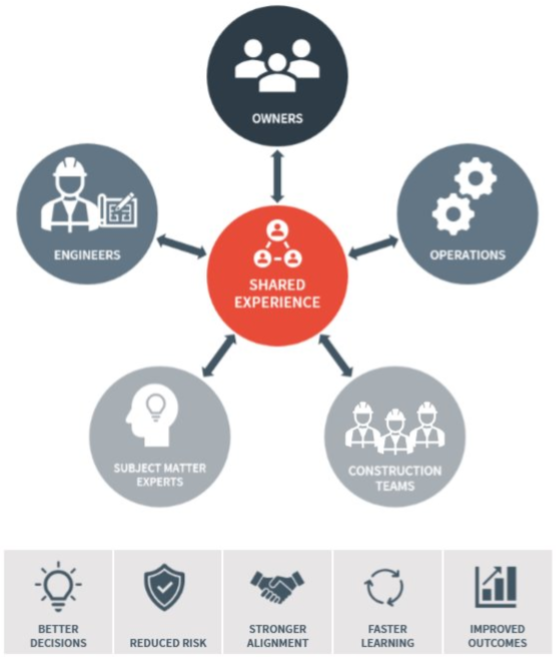
Integrated teams create a broader base of shared experience, allowing decisions to be informed by technical, construction, operational, and business perspectives. The result is higher-quality decisions and more successful project outcomes.
4. Use technology with intent
Digital tools, analytics, and AI can identify patterns, flag emerging risks, and support decisions. They should enhance human judgment, not replace it.
A leadership challenge
This is ultimately a leadership decision… leaders must consider:
Whether speed is prioritized over capability
Whether experience is treated as a strategic asset
Whether organizations are designed to deliver projects or to improve how projects are delivered over time
The question is not whether phronesis matters. That has already been established. The question is whether the industry is prepared to invest in it with intention and at scale.
What’s next?
The next phase of this series will explore how reliability, performance metrics, and key value drivers can reinforce strong ramp-up outcomes and translate strategy, readiness, and capability into measurable performance.
We welcome your input. Share the topics you would like us to explore in future blogs at britt.mackinnon@hatch.com
References
1 1 McNulty, T. (1998). Innovative technology: Its development and commercialization. In M. Kuhn (Ed.), Managing innovation in the minerals industry (pp. 1–14). Society for Mining, Metallurgy, and Exploration. McNulty, T. (1998). Developing innovative technology. Mining Engineering, 50(10), 50–55.
2 Flyvbjerg, B., & Gardner, D. (2023). How big things get done: The surprising factors that determine the fate of every project, from home renovations to space exploration and everything in between. McClelland & Stewart. 80-96.
3 Flyvbjerg, B., & Gardner, D. (2023). How big things get done: The surprising factors that determine the fate of every project, from home renovations to space exploration and everything in between. McClelland & Stewart. 6-19.
4 McNulty T, MacKinnon B, Mackey P (2025) McNulty Curves—An Update and New Perspectives. In: 12th International Copper Conference. COPR 2025. Springer, Cham. https://doi.org/10.1007/978-3-032-00102-3_102
5 Baekeland LH (1916) Practical life as a complement to a university education, Perkin Medal address. Ind Eng Chem 8:177-190.
Britt MacKinnon
Process Engineer, CORE
Britt MacKinnon, P. Eng completed her Applied Sciences degree in Chemical Engineering and Certificate in Business at Queen’s University in 2019, and she was invited back to Queen’s University to deliver the keynote about the importance of ethics in engineering. Britt is part of Hatch's CORE (Commissioning, Operations Readiness, and Ramp-up Excellence) team and is currently on site in Idaho, USA supporting the commissioning of a mill restart. Her work has taken her across the globe to Brisbane, Australia, for nearly two years, beginning in 2023, before being assigned to North Carolina, USA to serve as a process engineer.
Britt serves on the MetSoc Board of Directors as the Sustainability Section Chair and was recognized with a 2021 Association for Iron & Steel Technology (AIST) Presidential Citation for her “contributions as a Young Professional and rising leader in AIST”. AIST is the global leader in networking, education and sustainability programs for advancing iron and steel technology.
Terence (Terry) McNulty
Dr. Terry McNulty is a metallurgical engineer with degrees from Stanford University, Montana Tech, and the Colorado School of Mines. A registered professional engineer, he spent 20 years at the Anaconda Company and later held executive roles at Kerr-McGee Chemical and Hazen Research. In 1988, he co-founded T. P. McNulty and Associates, a global consulting firm. Terry holds two patents in copper metallurgy and has published over 50 technical works. He is a member of several professional societies and was elected to the National Academy of Engineering in 2005. His numerous honors include the Robert H. Richards Award and Distinguished Alumni Awards from Colorado School of Mines and Montana Tech.
Phillip Mackey
Dr. Phillip Mackey is a globally recognized metallurgist known for pioneering copper smelting technologies, including the Noranda Reactor and Converting Processes, which have transformed non-ferrous metallurgy worldwide. Originally from Australia, he earned his BSc and PhD from the University of New South Wales before moving to Canada, where he led innovations at Noranda and later Xstrata. Mackey has authored over 100 technical papers, mentored future metallurgists at Laurentian and McGill, and served as an honorary professor in China. A Fellow of CIM and TMS, his numerous accolades include the Airey Award and the Noranda Technology Award. He continues to contribute through global consulting and board service.
Our perspectives
More conversations about the world's biggest challenges