“There were many success factors to this project, but the main success was around strong relationships. Our project team became extremely well-integrated with the operations team at Moma. We saw that there were fantastic relationships with our EPCM team, particularly personnel that had been with us throughout several previous projects over many years. The dedication of the contractor group was also fantastic—they worked as partners. Every contractor went the extra mile.”
How we can help you
If you have a problem that needs to be solved, please get in touch.
Mozambique―a country on the east coast of Southern Africa―is perhaps most famously known for its long Indian Ocean coastline, stunning beaches, and offshore marine parks. What many may not know is that in the northern part of the country lies one of the largest titanium mineral deposits in the world. It’s in this region that Kenmare Resources owns and operates the Moma Titanium Minerals Mine. Kenmare has mined the Moma area for 17 years and has sufficient resources to support production for more than 100 years at current rates.
The Moma area covers coastal and marginal dunes and produces mineral sands, including ilmenite, rutile, and zircon, essential for producing paints, pigments, plastics, and ceramics.
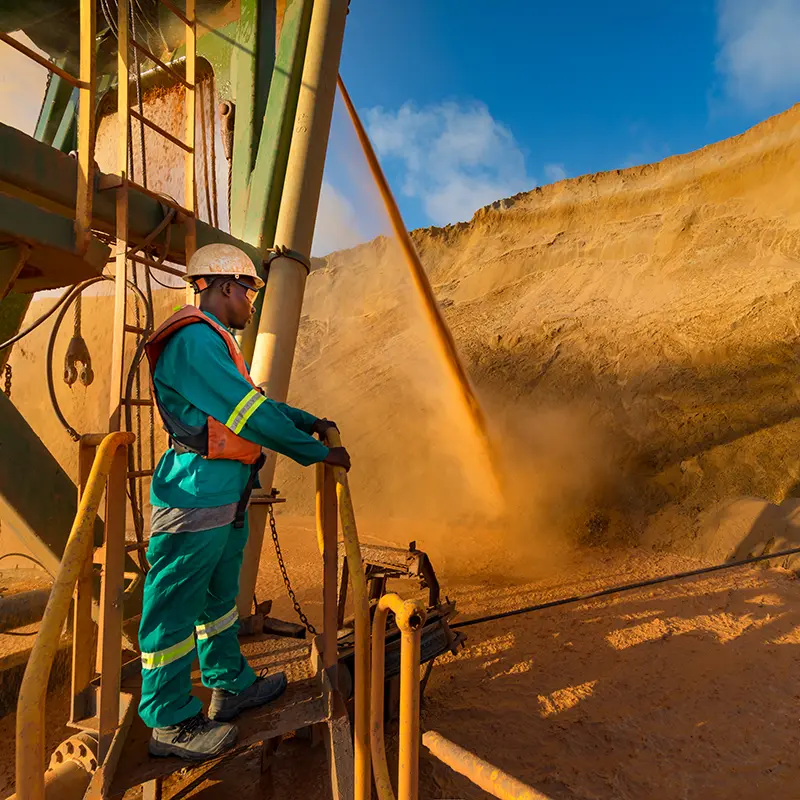
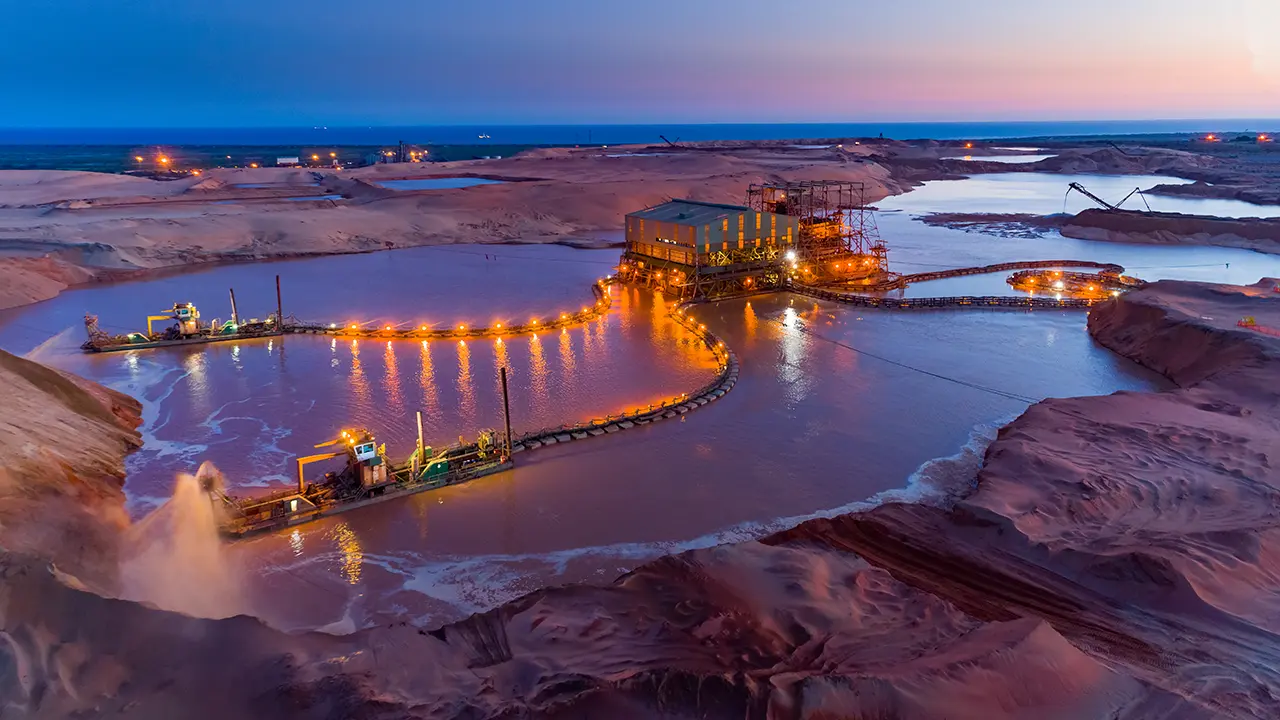
Mining at Moma is principally undertaken using dredges that float in artificial mining ponds. The dredges mine the mineral rich dunes from the ponds and pump the mineral sands to three floating wet concentrator plants (WCPs). Before extraction, the mining area is cleared of vegetation and topsoil, which are preserved for subsequent land rehabilitation. Initial processing occurs via the WCPs, where oversized materials are discarded, while the mineralized feed is processed through gravity spirals to separate the heavy mineral concentrate (HMC) from silica sand and clay tailings. Following this, the HMC is transported to the mine’s Mineral Separation Plant to undergo further processing into finished products.
Within the Moma Mine there are nine ore zones. Kenmare is currently mining the Namalope ore zone with WCP A and WCP C while WCP B is currently mining the Pilivili ore zone, with plans for WCP A to begin transitioning to the Nataka ore zone from late 2025.
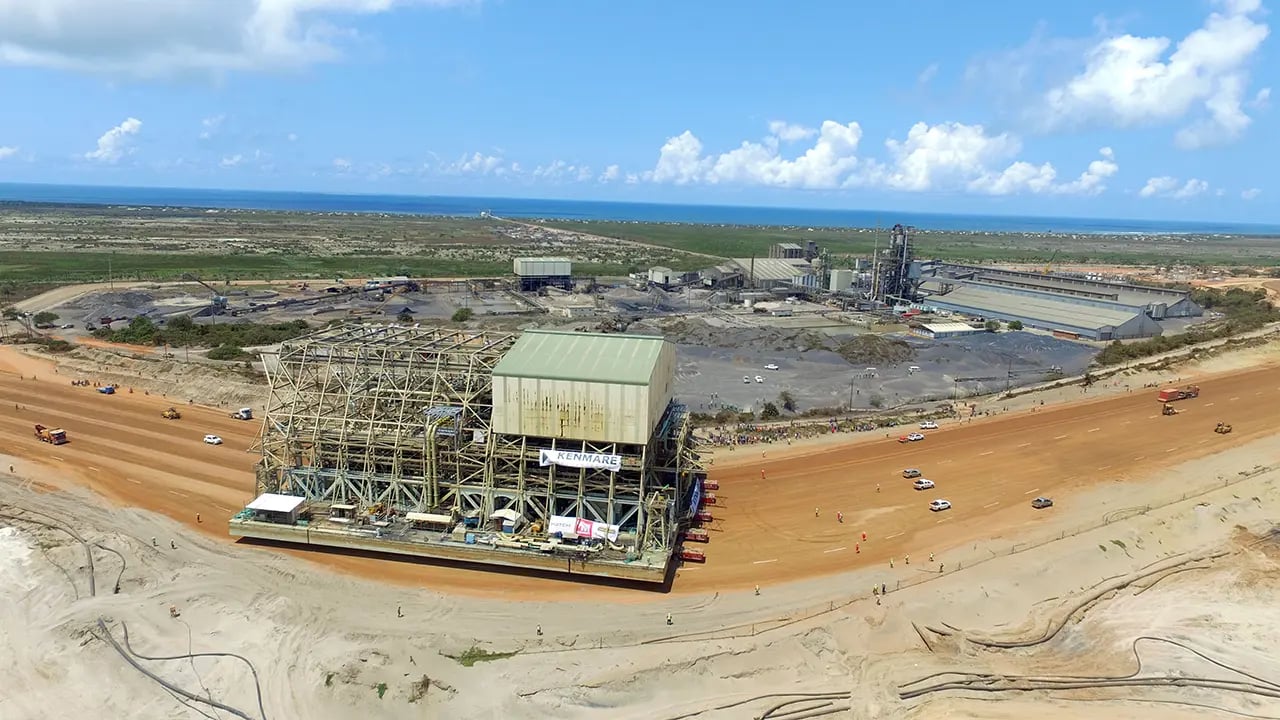
Since 2016, Hatch and Kenmare have built a long-term, successful partnership, working together on multiple projects to unlock the full value of the Moma Mine. One such project included moving WCP B from Namalope to Pilivili—a significant undertaking that involved relocating an 1,800-tonne dredge and a 7,000-tonne WCP via a purpose-built 23-kilometer road. The equipment was moved using self-propelled modular transporters (SPMTs)—computer-operated, multi-axle platforms capable of carrying large, heavy loads. The project set a record for the world’s largest mining equipment road transport by SPMT. We’re proud to have provided full EPCM services for this project, which won several industry awards.
42 pontoons, each weighing between 40–60 tonnes, will be transported to site via sea and 20-kilometers of upgraded road
Kenmare has now embarked on a program to mine the Nataka ore zone, Moma’s largest ore zone, which holds 6.4 billion tonnes of mineral resources, approximately 70% of total resources. To do so, Kenmare will transition WCP A, their largest mining plant—representing approximately 50% of total mining capacity—from its current mine path in Namalope to Nataka, beginning in late 2025.
Relocating an entire plant to a new location is a complex process, but we’re building on our experience from the WCP B move to create an innovative project approach and, once again, are partnering as Kenmare’s EPCM service provider as part of an integrated team.
WCP A is currently configured with two dredges as well as supplementary dry mining systems. At its new location in Nataka, two new higher-capacity dredges will increase the mining throughput and eliminate the need for higher-cost dry mining. The dredges are being procured in the Netherlands and shipped to site. Plans are in place to beach-land the dredges directly at the mine site area and move them to the staging pond via SPMTs. This approach will allow the dredges to be delivered as one unit, reducing on-site assembly time and costs.
Prior to its transition to Nataka, WCP A will be upgraded to include an upfront desliming circuit, a key element of managing increased slimes levels of the Nataka orebody. WCP A’s new plant will be floated on 42 pontoons, which are currently being fabricated in Richards Bay, South Africa. Each pontoon weighs between 40–60 tonnes and will be transported to site via sea and a 20-kilometer road. The weight of these pontoons required parts of the road to be upgraded.
A new tailings storage facility will be installed at Moma to manage waste materials more effectively, replacing the existing paddock system. Kenmare’s mining technique involves extracting sand from the base of the mining pond. Approximately 95% of this extracted sand contains non-valuable minerals, such as silica and clay, and is re-deposited.
Only 5% of the extracted sand includes the sought-after heavy minerals. Implementing a solution for managing the unusable sand is important and allows it to be incorporated in the land rehabilitation process. Mining processes at Moma remain free from toxic chemicals with continuous tailings management and land rehabilitation performed throughout operation. This enables land to be progressively restored as the WCPs advance through the ore body. Kenmare’s goal is to rehabilitate and return mined land to the community for agricultural use in a timely manner.
To operate WCP A in the Nataka area, new ancillary infrastructure will be installed from Q1 2025 until Q1 2028. This infrastructure consists of overland piping and pumping systems for water, slimes, and tails management, 22-kilovolt and 110-kilovolt overhead power lines, access roads, and an infrastructure terrace for facilities and mechanical services equipment.
Mozambique’s rainy season in the first quarter of the year can disrupt grid power stability, negatively impacting production. To safeguard against this, a rotary uninterruptable power supply (RUPS) was installed by Kenmare in 2021. The RUPS has been instrumental in stabilizing power supply and maintaining continuous operation of the mineral separation plant..
2025 will see continued growth and success at Moma, driven by increased mine production and improved infrastructure and community development.