Nemaska Lithium
Nemaska Lithium
|
Bécancour, Québec, Canada
|
2024
Pioneering. It’s a word reminiscent of bygone days when toiling the earth for improved existence drove changes in human behavior. In today’s energy transition, the same reference is appropriate once again, aptly describing the first-of-a-kind projects emerging in response to the need for clean energy solutions.
New facilities to support the production of lithium-ion batteries are being designed and constructed around the world as the industry strives to meet the market’s almost insatiable demand, expected to increase tenfold in just one decade, leaping from 185 GWh in 2020 to more than 2,000 GWh by 2030. Shifting market dynamics pose challenges that require a nimble, relentless approach.
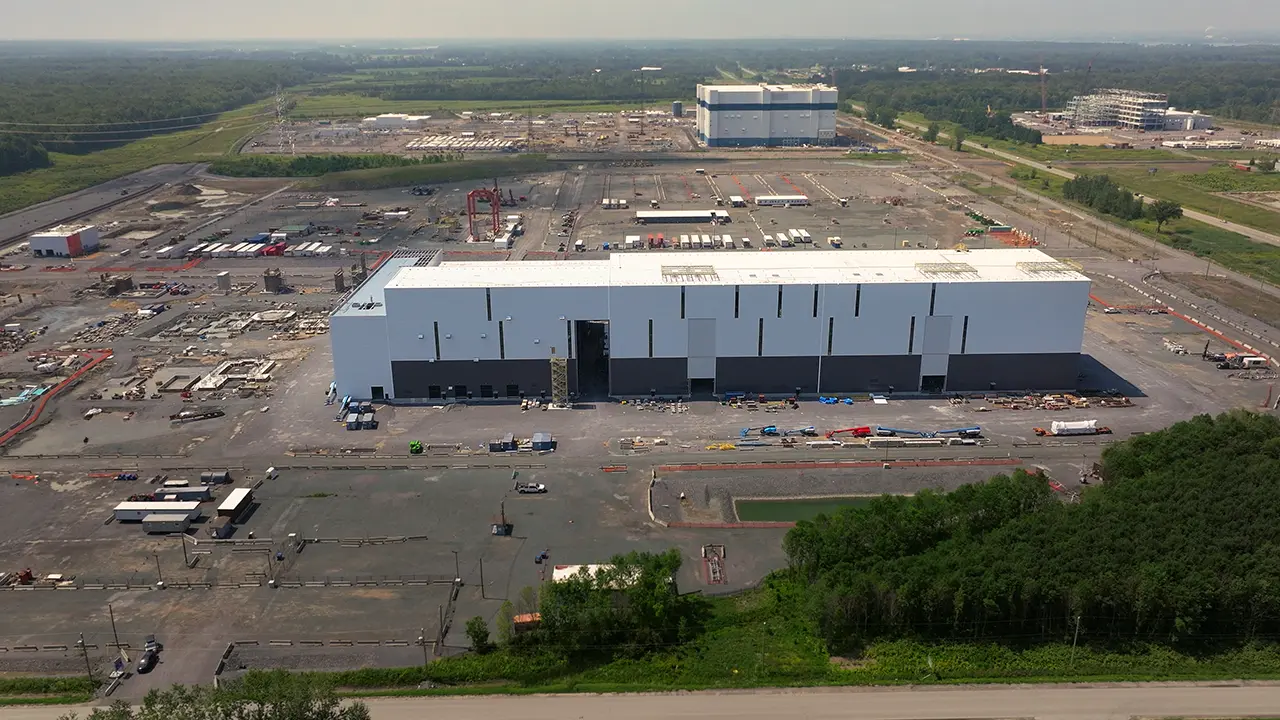
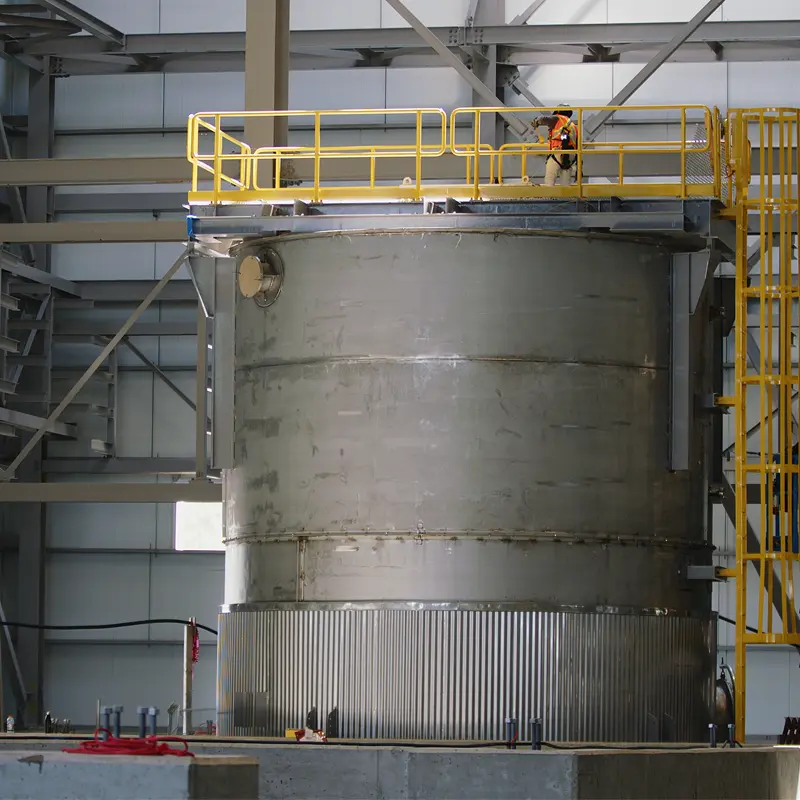
Nemaska Lithium is leading the charge in North America—constructing the first large-scale integrated complex, including a mine, concentrator, and spodumene-to-lithium hydroxide refinery. Spodumene will be extracted, crushed, and concentrated at their Whabouchi mine before being transported to the conversion facility for calcining and chemical treatment. The process uses a conventional pyrometallurgical process consisting of calcination, milling, and acid roasting to liberate the lithium, followed by a hydrometallurgical process to leach the spodumene, purify the lithium sulfate solution, convert it to lithium hydroxide, and produce battery-grade lithium hydroxide monohydrate (LHM) crystals.
We have been involved with this project from the very start, beginning with the order of magnitude, prefeasibility, and feasibility studies. We provided process expertise to Nemaska Lithium as they explored various process optimizations, performed test work, and engaged with vendors before deciding upon the current design in 2021. And we supported Nemaska Lithium’s site selection activities as they determined the best site for the project. We completed the voluntary environmental impact assessment study, which was instrumental to the permitting and social acceptability strategies, and enabled an accelerated schedule. Now in construction, with ramp-up expected in 2026, we are playing a key role as their sole EPCM provider.
The Nemaska Lithium integrated project is being executed on a vast scale, with an inclusive team approach that, at peak, includes 400 experts from 39 Hatch offices worldwide. The project team is united, overcoming challenges to deliver with planned precision in unconventional ways. To ensure that this large, global team can deliver as promised, we’re using custom system integration, templates, and workflows to maximize productivity and allow people to work in parallel.
The project is making full use of our digital project delivery (DPD) platform to efficiently manage information from the start of the project to final handover to Nemaska Lithium. Overall, we have 120 procurement packages to oversee with more than 75,000 documents. Collaborating in a shared data environment enables the Nemaska Lithium team to fully engage with the Hatch team, increasing accuracy and limiting potential rework.
The client controls the outcome through real-time data extracted from our DPD platform, which allows for efficient and accurate project reporting. Using DPD, project management goes beyond traditional methods. The engineering data is used by the procurement, project controls, construction, and commissioning teams to generate reports that support trend and change management and enable timely decision making.
More than 1 million hours worked without a lost-time incident
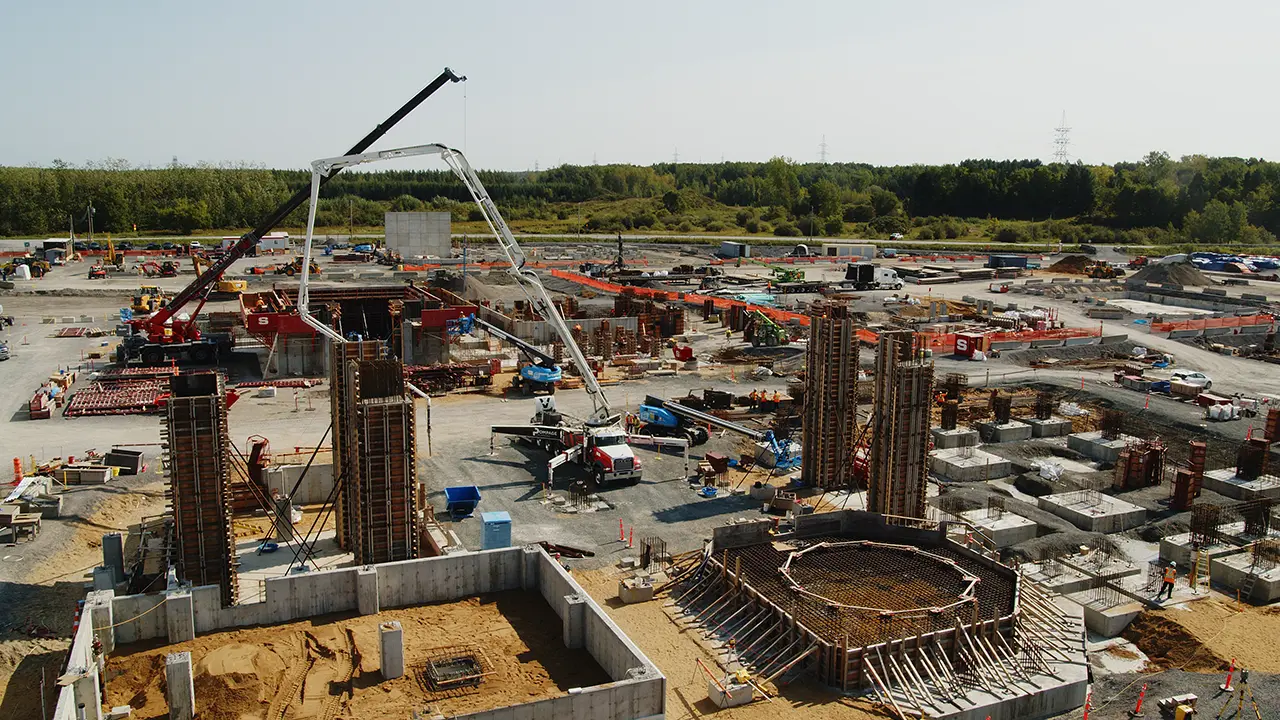
The construction strategy was developed with timely constructability reviews and PPMOF (prefabrication, preassembly, modularization, and off-site fabrication) detailed studies to optimize the schedule, sequence of activities, and site hours while improving safety. The temporary construction site facility was developed to optimize worker, vehicle, and machinery traffic flow. At peak, the site will have more than 1,500 workers.
In close collaboration with Nemaska Lithium, our engineering team developed detailed designs and specifications for the project’s processes, including more than 3,600 pieces of equipment, 5,400 piping lines, and 15,000 instruments.
Our procurement strategy leverages our global network of suppliers for the fabrication and assembly of high-quality goods. Then, our logistics team manages the delivery of purchased equipment and materials to site at the right time.
Projects of this complexity present an increased safety risk. We are proud that our rigorous prevention program, regular interventions, daily coordination meetings with contractors, on-the-ground risk assessments, and numerous behavior-based interventions and initiatives continue to return each worker home safely at the end of the day. We have achieved more than 1 million hours worked without a lost-time incident.
Next up? Providing EPCM services for FEL4 on the mine and concentrator.