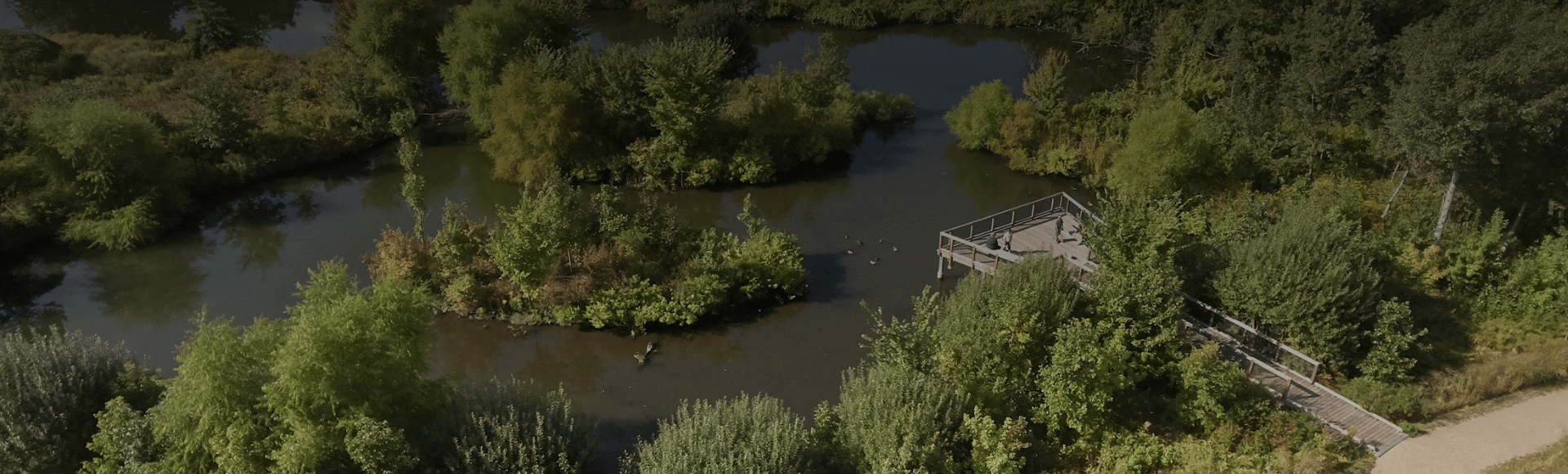
Alewife Stormwater Wetland
Stormwater wetland integrating flood control, wildlife habitat, and passive recreation.
City of Cambridge, Department of Public Works
|
Alewife Reservation, Cambridge, Massachusetts
|
2013 (Construction)
Award: American Public Works Association (APWA) Public Works Project of the Year (2013)
Award: Boston Society of Landscape Architects (BSLA) Honor Award (2017)
Award: American Council of Engineering Companies (ACEC) Engineering Excellence Award (2013)
Challenges
- Providing strict detention and water quality treatment performance requirements for combined sewer overflow (CSO).
- Including the creation of wildlife habitat, trails, and public amenities consistent with DCR’s Alewife Reservation Master Plan.
- Coordinating permitting and public outreach to satisfy MEPA requirements, agency goals, and stakeholder concerns.
Solutions
- Developed and evaluated design alternatives, led public outreach, and navigated multi-agency permitting to align technical, ecological, and community priorities.
- Created an integrated bioengineered stormwater basin using an organic grading and landform approach, native plant communities, and thermal regulation features to improve water quality and enhance long-term ecological processes.
- Created a valuable passive recreation public amenity with timber boardwalks, overlooks, amphitheater space, and interpretive signage, transforming stormwater infrastructure into an educational and recreational community amenity.
Highlights
- Bioengineered slopes
- Habitat creation and enhancement
- Circulation and recreational improvements
- Stormwater wetland system design
- MEPA permitting support
- Public outreach
- Landscape architecture
- Geotechnical/site civil engineering
- Educational signage and amphitheatre
- O&M plan and training workshops
- Invasive species management plan
Described in the Boston Globe as “a far cry from the traditional treatment prescribed by engineers,” the stormwater wetland incorporates both conventional and bioengineered structures designed with a natural “look and feel” that won praise from stakeholder groups.