Central Hidroeléctrica 3 de Febrero
Comisión Eléctrica de El Río Lempa
|
El Salvador
|
2019-2023
Comisión Eléctrica de El Río Lempa
|
El Salvador
|
2019-2023
In 1998, the Government of El Salvador initiated surveys to construct a dam and hydroelectric power plant—a project that promised a significant boost to the region’s electrical capacity and a dramatic improvement to local roads and bridges. Following initial assessments conducted by a previous contractor, construction kicked off in due course in 2008 when the first stone was laid by former President Elias Antonio Saca. But before long, the project encountered a major setback when tropical storm Agatha hit in 2010.
Over the next nine years, the project experienced several challenges, resulting in numerous stops and starts. The country was also in the midst of privatizing its electricity sector, putting the project’s compliance with El Salvador’s Ministry of the Environment and Natural Resources (MARN) seriously at risk.
The project was put on hold when it was three quarters complete due to setbacks.
When construction finally resumed in 2019, President Nayib Bukele renamed the project from El Chaparral to Central Hidroeléctrica 3 de Febrero—a fresh start for the project in reference to the day he was elected president.
President Bukele initiated a request through the Comisión Ejecutiva Hidroeléctrica Del Rio Lempa (CEL) to undertake a technical audit of the project to ensure that completion of a partially built facility made economic sense with no significant hidden technical faults.
It was at this point that we were engaged by CEL because of our international reputation as a trusted, global firm with deep technical bench strength. Our first order of business: to determine the path forward. CEL needed to understand the costs and risks of completing the project versus decommissioning and restoring the site. Our audit concluded that there were no significant technical flaws and that it was more economic to finish the project than to abandon it given its advanced construction stage and the need for additional hydropower in the region.

CEL agreed with our recommendation and in October 2020, at the height of the COVID-19 pandemic, they requested us on site within a mere three weeks to provide engineering, procurement, construction management, project management, on-site technical support, commissioning, and operational readiness.
We launched a full-scale review of 12 years of designs, handovers, relocations, change orders, and more, and in the process uncovered areas of construction and design that were non-compliant with best practices and codes.
We conducted studies to define the project scope with estimated costs and timelines. We also completed design engineering, which involved detailed plans to address technical and environmental requirements associated with the main facility, including the construction of new roads and two new bridges.
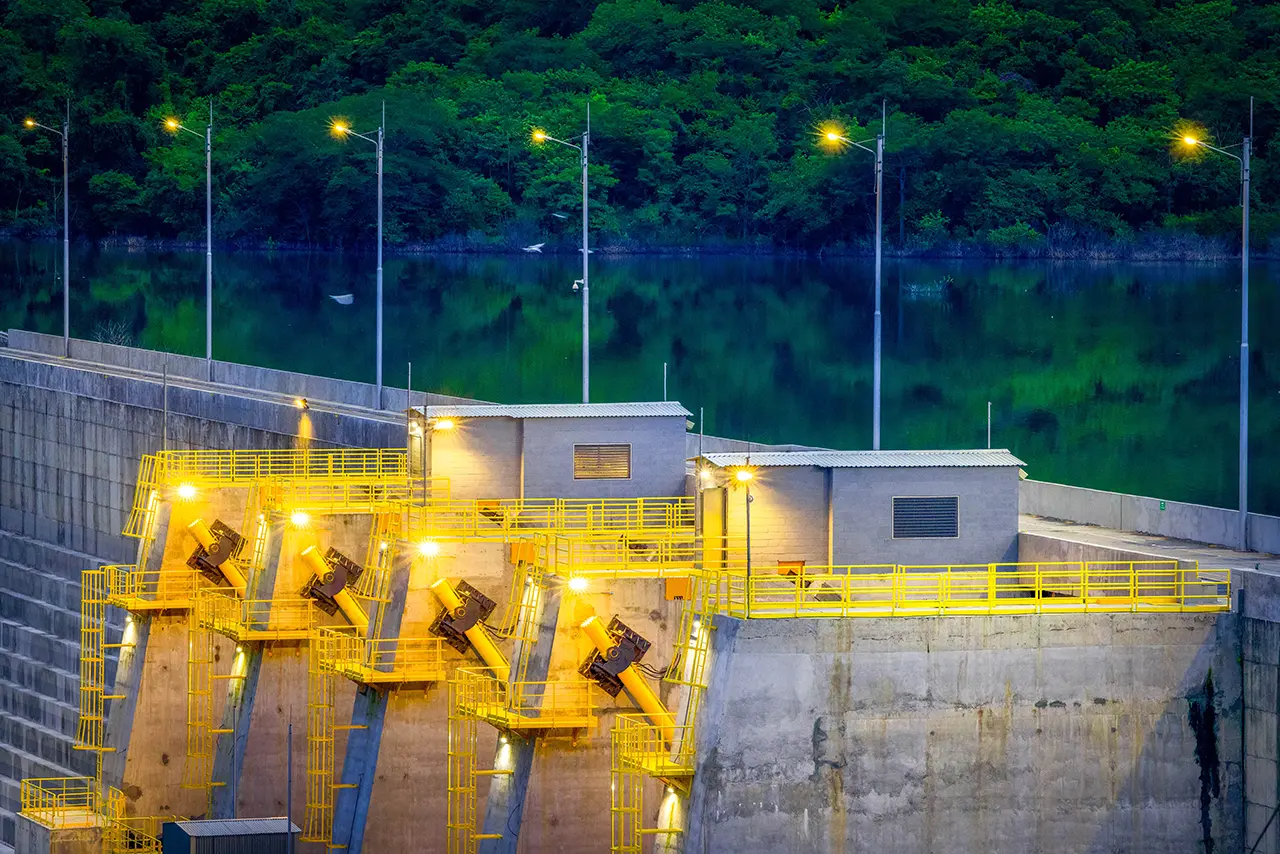
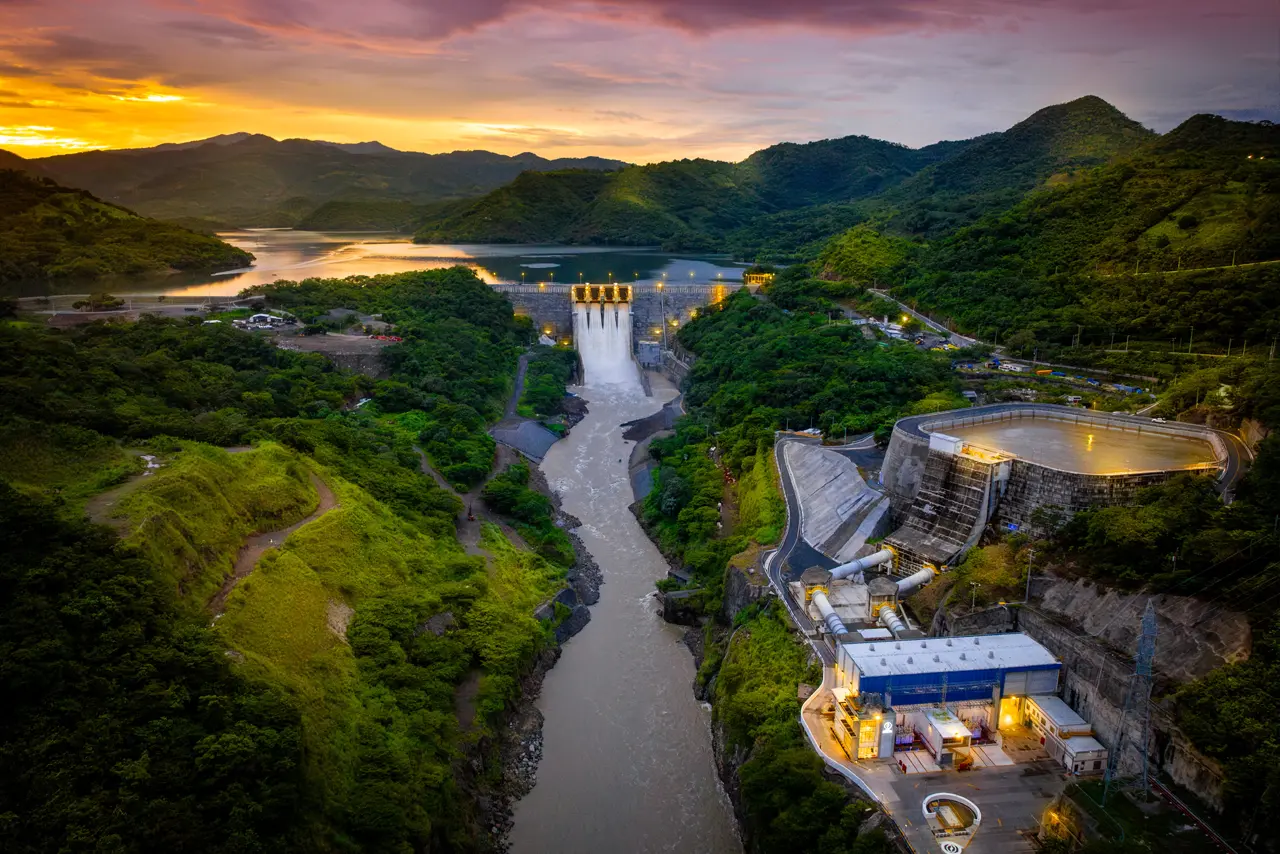
In collaboration with CEL, in addition to designs, we provided construction management support for a large 10.8-square-kilometer surface area annual storage reservoir, including rim stabilization and an 84-meter-high, 325-meter-long roller-compacted concrete (RCC) dam, including an elaborate grout curtain. The scale of the work was massive, with a four-bay reinforced concrete spillway, including large radial gates and stilling basin, and an intake structure with a 750-meter-long, 6.5-meter-diameter conduction tunnel. River stabilization and protection downstream of the stilling basin included a bypass and weirs as well as stabilization of the original dam site area.
A uniquely designed 5,500-square-meter surge pond was constructed from gabions to reduce costs, and a 25-meter-high by 500-meter-long earth embankment closure dike was constructed to complete the reservoir. Work on civil, architectural, mechanical, and electrical aspects of the partially constructed powerhouse was also in our scope.

Partially aggravated by the excavation associated with the original dam, the entire right riverbank area had long-term stability issues. For the project to be brought into compliance with MARN, a plan was required to secure the right bank to prevent material from impacting the river’s conveyance. We identified the source and trigger of the movement—a deep-seated fault within a weak bedrock plane that was saturated by an unusually wet rainy season—and a multi-faceted plan was recommended to successfully address the issue.
The closure dike design was reimagined when supply chain challenges made importing traditional clay core materials impractical. We opted for a PVC membrane, combined with a highly compacted sand and gravel embankment, to provide a reliable and cost-effective water barrier.
With a design that ensures uninterrupted ecological flow throughout the river—protecting downstream communities and wildlife—the reservoir created by the project has increased fish populations, supported sustainable fishing practices, and continues to provide a reliable food source for the surrounding communities. Its storage capacity helps mitigate floods, mudslides, and erosion, providing long-term environmental benefits. And by opening new navigation routes within the reservoir, the project also reduces travel distances and carbon emissions. The hydroelectric station’s location on the Torola River allows for the reuse of water in electricity production, enhancing overall energy efficiency and sustainability.
The heart of Central Hidroeléctrica 3 de Febrero lies in its powerhouse. Inside, you’ll find two 32.2-megawatt generating units and a smaller 1.42-megawatt minimum flow unit. Two penstocks channel water to the turbines, and upstream, the substation acts as the power plant’s nerve center, responsible for stepping up the voltage of the generated electricity for transmission to the grid.
The Central Hidroeléctrica 3 de Febrero hydroelectric project was inaugurated in October 2023, during a ceremony in which President Bukele celebrated the success of the project, sharing that electricity prices would reduce by 14%.
What was once a project plagued by delays and cost overruns became a political and economic success. The project has become a legacy, a landmark, and an ongoing source of prosperity.