
View in French / Voir en français
Canada’s sovereignty is rooted in infrastructure that works where few others can—across vast distances, extreme climates, and rapidly changing geopolitical realities.
We specialize in planning and delivering mission-critical projects in remote, complex, and strategically sensitive locations; ensuring every tax dollar supports the mission, the mandate, and the public trust.
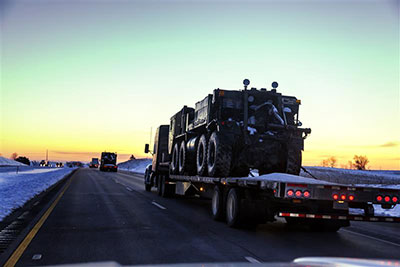
Infrastructure is sovereignty
The Canadian Armed Forces face mounting pressure to extend and sustain their presence across the Arctic to protect Canada, secure North America, and contribute to global stability.
Our Arctic and maritime regions are critical to Canada’s sovereignty, resilience, and continental defence and require ‘no fail’ connectivity, trade security, and rapid response.
Dual-Use Infrastructure assures Sovereignty and Security
Hatch delivers across sectors and environments including:
-
Arctic
Resilient, mission-critical, no-fail infrastructure north of 60° to sustain forward deployments, leverage and integrate existing assets, strengthen communities, and enhance situational awareness. -
Aviation
Aviation infrastructure support readiness and help keep military and civilian operations interconnected and mutually supportive. -
Maritime
Maritime facilities that support Navy and CCG vessels, heavy sealift for resupply to support rapid response, freedom of navigation, and secure trade routes. -
Power
Reliable and interoperable energy systems designed to be modular, scalable, redundant, and perform in the harshest environments.Dual use infrastructure that is coordinated across defence and civilian demands, will accelerate deployment, shield the force, improve logistics, and enhance readiness across domains.
Why Hatch:
We have built our understanding of Canada and especially our north through decades of work in regions where distance, climate and logistics shape every aspect of delivery. These projects have taught us how infrastructure must perform when conditions are least predictable.
Our approach has also been shaped by longstanding relationships with Indigenous communities. Their knowledge of the land has informed our planning and grounded our decisions for what works locally, not just theoretically.
Across the Arctic and other remote areas, where infrastructure often carries strategic significance, we hold to a simple principle: dependable delivery comes from understanding the place and the people it must serve, and from being honest about what it takes to work there.