Turning furnace data into performance intelligence
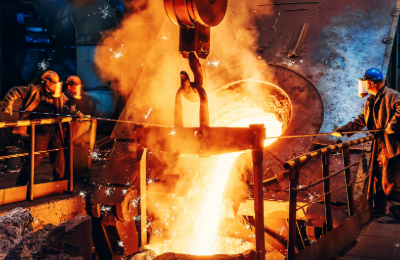
Furnace operations today generate enormous volumes of equipment data: temperatures, pressures, flow rates, feed rates, power inputs, maintenance logs, inspection notes, and more. Yet raw data, no matter how comprehensive, does not improve furnace reliability or extend campaign life on its own.
What matters is the ability to transform that information into performance intelligence: actionable insight that guides decisions, reduces risk, and strengthens the long-term health of critical assets. The stakes are high—without that insight, organizations face everything from inefficient maintenance spending to severe structural failures such as furnace run-out, where molten material escapes from the furnace.
The challenge is compounded by a generational shift. As experienced operators and engineers retire or move to other sectors, the institutional knowledge that once turned raw numbers into sound judgment is walking out the door. The need for structured, system-based intelligence has never been greater.
The foundation: Asset Performance Management
This is where Asset Performance Management (APM) comes in. APM is a disciplined system for synchronizing production data, maintenance data, condition monitoring results, and inspection findings into a single, coherent picture of asset health.
Without this structure, organizations tend to fall into one of two traps:
- They under invest because they cannot see the risks.
- They over invest because they fear what they cannot quantify.
Both outcomes stem from the same root cause: data without context. And as institutional knowledge erodes, that gap widens.
How APMaaS works
Closing that gap requires more than better tools; it requires a disciplined method. Our APM as a Service (APMaaS) approach addresses this gap through a structured workflow:
1. Collect the data
2. Analyze it
3. Interpret it using subject-matter expertise and to teach AI
4. Recommend actions with AI assistance
Each step builds on the last, and each is grounded in engineering logic specific to the asset.
Start with a performance plan. Every APMaaS engagement begins by establishing a plan tailored to each asset. This plan defines what needs to be measured, how frequently, and which correlations matter most. It also clarifies the engineering logic behind those measurements. Consider buckstay rotation—the movement of the structural members that restrain furnace expansion and internal pressure. This metric is directly tied to hearth integrity. Understanding that relationship determines how measurements should be taken, what limits indicate concern, and what actions should follow when trends shift.
Streamline data collection. A digital platform ingests real-time sensor data from the operational technology network while capturing manual observations through mobile applications. Organizing this information into an asset hierarchy allows engineers to trend, compare, and interpret data in a way that reflects how the equipment actually functions—not just how it is instrumented.
Interpret with expertise. Dashboards configured by APM engineers visualize KPIs, limits, and trends. But dashboards alone do not create insight. The real value comes from the interpretation layer, where furnace specialists understand the relationships between components, the design limits, and the failure modes. They look at a trend line and see not just a number, but a story: a shift in operating conditions, a developing wear pattern, or an early sign of instability.
This is a critical distinction. Many organizations collect data because they can, not because it is tied to a performance objective. APMaaS ensures that every data point has a purpose, some context, and a defined role in understanding asset behavior.
Many organizations collect data because they can, not because it's tied to a performance objective.
When data is contextualized and interpreted, organizations can move from reactive maintenance to proactive, evidence-based decision making. Instead of waiting for a problem to become visible—or relying on individual experience alone—operators act on clear, data-driven insight supported by embedded engineering logic. At the age of digitalization and AI, data driven predictive maintenance programs are achievable.
Systematizing these services have also allowed Hatch to identify behavioral patterns across assets and operating conditions. These patterns help derisk changes to operating windows, prioritize improvements, and optimize maintenance practices. Over time, a feedback loop emerges: better data leads to better interpretation, which leads to better decisions, which leads to better performance.
In this way, performance intelligence becomes a strategic asset, not just an operational tool.
Real world impact: When data becomes insight
Two examples illustrate how this transformation plays out in real-world operations.
Flash furnace monitoring
In flash furnaces, reaction shaft integrity is notoriously difficult to monitor. Thermocouples provide temperature data, but temperature alone cannot distinguish between refractory wear and build-up formation. AU-E (Acousto Ultrasonic-Echo) testing adds accurate thickness measurements and can detect the deference between the refractory and the buildup, while thermal monitoring can only estimate the thickness of the refractory and build-up as a single mass. The fusion of the two sets of data provides an accurate inner dimension of the reaction shaft.
When these data streams are integrated into APMaaS, engineers can identify correlations that were previously invisible. The results include:
- Early detection of unfavorable conditions
- Better planning for maintenance
- Reduced risk of unplanned outages
- Improved ability to time relines and major interventions
This shows how combining multiple diagnostic methods produces intelligence that no single method could provide on its own.
Furnace binding systems
Furnace binding systems—the structural framework, including backstays that hold the furnace shell together under thermal expansion and internal pressure— were traditionally monitored through annual buckstay surveys, with analysis taking more than a month.
By digitizing the workflow—allowing surveyors to enter data directly into a mobile app and automating the transformation and reporting—Hatch reduced the turnaround time to near real-time. When unexpected movement occurs, specialists can respond immediately, delivering:
- Improved safety
- Reduced risk of structural instability
- Faster decision‑making
- More accurate long-term trending
Most importantly, earlier detection of abnormal movement supports interventions before conditions escalate toward high-consequence events.
The bottom line
Both examples demonstrate the same principle: when data is structured, contextualized, and interpreted, it becomes performance intelligence that directly improves asset reliability.
If you’re ready to turn equipment data into actionable insight and build a more resilient, predictable operation, reach out to Hatch. Our specialists can help you assess where performance intelligence will deliver the greatest impact. Connect with Afshin to learn more.
About the author

Afshin Sadri
Technical Director, Asset Performance Management (APM) Group
Afshin has nearly 30 years of technical experience in non-destructive testing and evaluation (NDT&E). He has developed and applied advanced stress wave and electromagnetic methods, including ultrasonic, impact-echo, MSR, and short-pulse radar. His work spans complex materials and industrial structures such as concrete, refractories, wood, rock, and coarse-grained materials. He is also the inventor of Acousto Ultrasonic-Echo (AU-E) along with eight other inventions and has taught NDT&E, geology, geophysics, and rock mechanics at leading universities.