Unlocking Alberta's potential energy

Similar to resource-rich Middle Eastern nations such as the United Arab Emirates (UAE) and Oman, Alberta benefits from a wealth of natural resources that extend far beyond oil and gas. Canada’s prairie provinces, including southern Alberta, have the most solar energy potential in the country1 and Calgary, with 333 sunny days in a year, is Canada’s sunniest city2. Meanwhile, northern Alberta is one of four regions with the largest geothermal potential3, and, thanks to the strong and constant winds coming off the Rockies, Alberta has some of the highest wind energy capacity in the country4. It also boasts significant bioenergy potential5.
So why does renewable energy make up just 15%6 of Alberta’s electricity? How can Alberta leverage its renewable resources alongside its traditional energy-based economy to build resilience in a rapidly evolving geopolitical landscape?
Using circular economy
Middle Eastern oil states are leaning into alternative energy sources while acknowledging the role oil plays in both their economies and in essential, hard-to-abate sectors such as aviation and fertilizers. The UAE, Saudi Arabia, and Oman have net-zero targets and have leveraged their plentiful wind and solar potential, integrating renewables with hydrogen and carbon capture and storage (CCS).
Take Oman, for example. Its US$140-billion investment in renewable (green) hydrogen includes 300 million solar panels and 10,000 wind turbines, with the hydrogen used for local industry. This includes refining, iron and steel, and chemicals. Green hydrogen can also be utilized with CO2 captured from fossil fuel facilities to produce e-fuels. These lower-carbon intensity alternative fuels can be used in applications where electrification or fuel cells aren’t the best solution. Alberta, with its renewable energy resources, oil and gas expertise, and its investment in carbon capture, is well positioned to expand and diversify its energy portfolio.
CCS is considered an essential decarbonization technology by both Canada and the Middle East, and even by European oil-producing states like Norway. Alberta’s Pathways Alliance and Carbon Trunk Line would be the world’s largest carbon capture and storage project, aiming to capture and permanently store CO2 from multiple oil sands operations. This project demonstrates how innovation and industry collaboration come together to meet the world’s growing energy demand while reducing carbon intensity, advancing CCS technology, and creating economic prosperity.
Expanding grid capacity
There’s also the issue of grid capacity. While Alberta is positioning itself as a prime location for AI development, proposed data center projects would require well over 19 GW of electricity, significantly higher than the province’s current peak demand of 12 GW7. Investment in renewables and small modular nuclear reactors (SMNRs) would also help power Alberta’s AI data center strategy.
Renewables are already being used to increase grid capacity. Between 2017 to 2022, Middle Eastern states increased their renewable energy capacity from 500 MW to 4,000 MW8, an increase of 700%9. Wood Mackenzie, a global energy research and consulting firm, reports that solar installations in the Middle East and North Africa will exceed 140 GW by 203010. These states are turning to low-cost, renewable energy that creates jobs and contributes to local economies to enhance their energy supply11, 12.
Apart from solar and wind, the UAE is also aiming to meet 25% of its total electricity needs from nuclear energy7, an approach that Alberta, with its proven uranium deposits13, could emulate. Furthermore, Alberta’s expertise in oil and gas extraction translates well to geothermal energy. Add to its significant bioenergy potential, and there is a wealth of options that can be used to expand grid capacity and position Alberta at the heart of the digital economy.
Turning potential into power
So, why does renewable energy still make up only 15% of Alberta’s electricity mix? The province has every ingredient to thrive in a rapidly evolving geopolitical landscape: extensive solar and wind resources, geothermal and bioenergy potential, uranium reserves, deep oil and gas expertise, and a leadership position in carbon capture. What the Middle East’s oil-producing states demonstrate is that these strengths can be complementary. By building a secondary economy that leverages the innovation and responsible development that Canada’s energy powerhouse is known for, Alberta can propel its prosperity, energy security, and resilience to new heights.
References:
[1] Photovoltaic potential and solar resource maps of Canada - Natural Resources Canada
[2] Calgary Energy Industry | Oil, Gas & Clean Technology | CED
[3] Geothermal potential report
[4] Why Alberta is becoming Canada’s renewable energy capital | The Narwhal
[5] CER – Renewable Energy in Canada – Alberta
[6] CER – Provincial and Territorial Energy Profiles – Alberta
[7] Will AI Data Centres Raise Water and Power Use in Alberta?
[8] Energy Transition in the Gulf
[9] Meanwhile, in the same timeframe, Alberta increased its renewable energy capacity from 2,700 MW to 4,900 MW, approximately 80% (see footnote 5)
[10] MENA solar growth | Wood Mackenzie
[11] Renewable energy – United Nations
[12] Renewable Power Generation Costs in 2024
[13] Uranium Potential in Alberta
Let’s connect!
Our Global Director for Decarbonization, Trevor Bergfeldt, will be onsite at Calgary Climate Week and a panelist on “Your Building Is a Liability. Until It Isn’t.” on Tuesday, June 2 at 1 p.m.
The panelists will be digging into:
-
What’s driving the urgency to decarbonize at scale
-
How insurers, investors, and policymakers are reshaping expectations
-
Where retrofits, placemaking, and engineering innovation are creating real value
-
Why early movers will define the next generation of cities
Trevor Bergfeldt
Global Director, Decarbonization
About the author
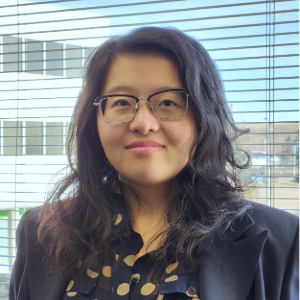
Emma Su
Engineering Trainee, Climate Change
Emma grew up in Calgary and is now an engineering trainee in the climate change business practice at Hatch. She has worked on projects such as the development of green industrial hubs; market, policy, and technical review for emerging green technologies; decarbonization roadmaps for mining and infrastructure clients; and GHG accounting and reporting. She holds a master’s and bachelor’s in engineering and has previous experience in renewable energy, including solar power and battery energy storage.