Data centers don’t fail on power. They fail on public trust.
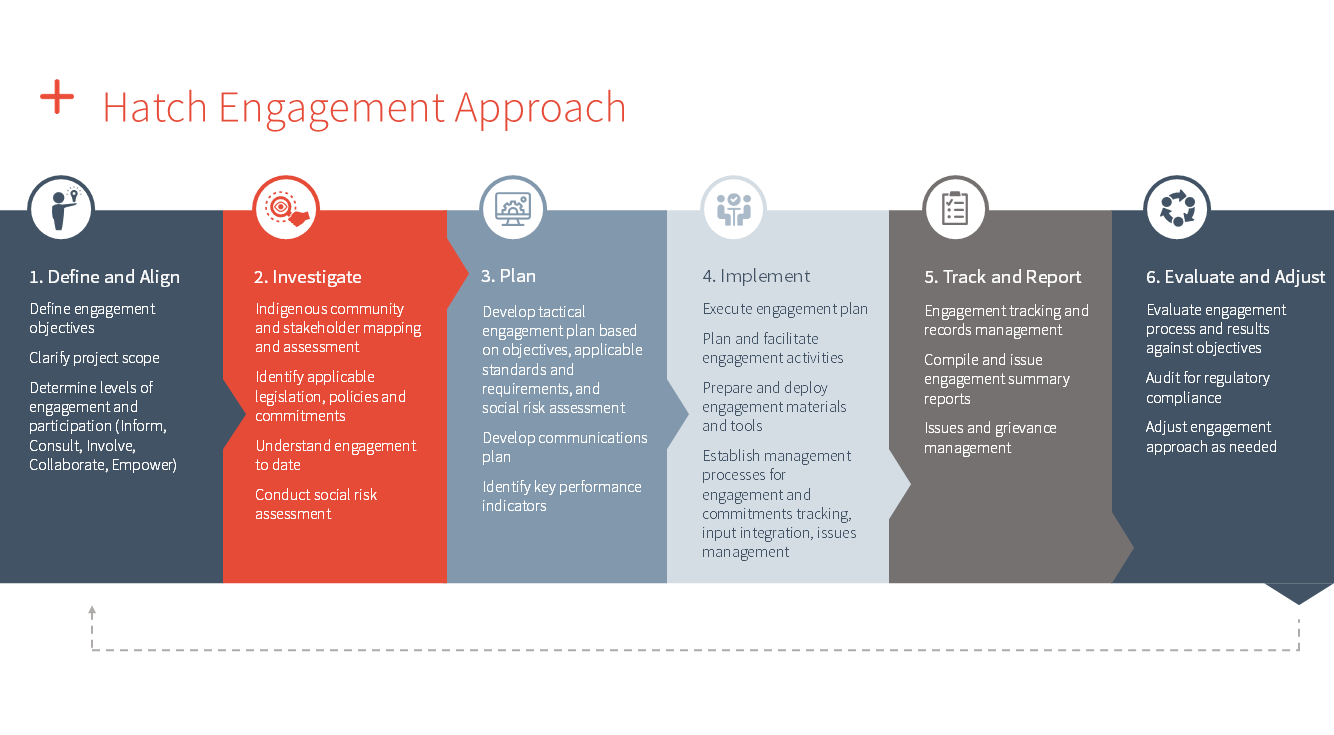
Most data center projects follow a familiar pattern: engage late, defend impacts, and negotiate under pressure. The result is slower approvals and higher risk. The alternative is to build social license from day one. That requires a different approach:
1. Earn trust early
Projects go wrong when engagement starts after key decisions are already made.
Treat engagement as a relationship, not a checkbox. Early, ongoing communication with local communities and stakeholders reduces opposition, speeds approval, and strengthens long-term social performance. When projects engage late, resistance and cost escalation often follow. Communities want clear, plain-language information about energy draw, water usage, noise, vibration, traffic, construction disruption, and environmental footprint. They also expect their input on project design and outcomes to be heard. Transparency and consistency build trust.
Suggested approach:
- Establish an engagement plan early: who to engage, when, and how.
- Solicit feedback and input from key stakeholders and rights holders before design is fixed; share what you hear and how you are responding.
- Share visualizations and renderings of site plans, buffers, noise contours, and traffic routing.
- Disclose water and energy profiles upfront, in plain language, with mitigation pathways and monitoring plans.
2. Prove value locally
Projects fall short when benefits are communicated at a macro level, not in ways communities can see or feel.
Communities respond to tangible, place-based benefits, not macro figures. In Northern Virginia, for example, data centers now generate 38% of Loudoun County’s General Fund and nearly half of its property tax revenue, enabling service improvements while easing resident tax burdens. Virginia wide, the sector contributed $640 million in state taxes and $1 billion in municipal taxes in 2022. In Loudoun, every $1 in public services used by a data center is offset by $26 in taxes paid, far outpacing the $4 per $1 typical of manufacturing. And the economic ripple effects are significant: for every direct data center job in Virginia, 3.5 additional jobs are supported elsewhere in the state’s economy.
This is the difference between perceived burden and demonstrated value that directly affects approval timelines. If communities can’t see where the value lands locally, the economic case won’t land at all. And when the case doesn’t land, projects stall.
Suggested approach:
- Use local dashboards and infographics to map where new revenues may go (schools, emergency services, broadband, parks).
- Pair multipliers with local suppliers and hiring pipelines, so residents see who benefits and when.
- Develop a robust social procurement strategy as well as local hiring and training program to ensure these economic benefits are realized.
3. Back it with evidence
A common mistake is to rely on commitments instead of evidence.
Concerns about water use, energy demand, and emissions are real—and solvable when addressed with data and design. Best practice guidance stresses full transparency on carbon, water, and utility impacts, plus visible innovations that reduce footprints over time.
Communities don’t trust commitments. They trust data, tradeoffs, and proof. Without visible proof, even well-designed projects face skepticism. This looks like publishing annual sustainability dashboards, highlighting renewable energy power purchase agreements (PPAs), and setting time-bound decarbonization targets with third-party reporting.
Data center growth is reshaping local grids and water systems, underscoring the need for clear rules on energy procurement, water stewardship, siting, and cost recovery to protect residents while enabling growth.
Suggested approach:
- Commit to water-wise cooling (e.g., rainwater harvesting, recirculation loops, heat tolerant liquid cooled chips, and adiabatic cooling systems) with transparent tradeoffs.
- Share grid interconnection roadmaps and onsite backup strategies that minimize air and noise impacts.
- Share power supply roadmaps, phasing plans, and short-term generation that transitions to backup power when a grid connection can be completed. Disclose local impacts, benefits to the environment, and costs of power.
4. Lock it into agreements
Communities are increasingly pushing back on developments that extract resources without leaving lasting local benefits.
Communities are increasingly pushing back on developments that extract resources without leaving lasting value behind such as workforce pathways, digital inclusion, community infrastructure upgrades, and even investment pathways. Leading advisors stress investing strategically to create shared value beyond compliance—linking facilities to local wellbeing, resilience, and opportunity. The economic story resonates when paired with ecosystem benefits—modernised infrastructure, support for emerging tech, and diversification of local economies.
Suggested approach:
- Explore economic partnerships with rights holders who may seek equity participation in the data center itself or enabling infrastructure such as power supply, or who may hold rights to suitable land.
- Co-design training pipelines with colleges and unions; tie commitments to hiring and apprenticeships.
- Fund digital literacy and broadband access programs that are visible to households, not just enterprises.
-
We’ve funded and staffed community STEM robotics programmes. Caldwell Parish schools in Louisiana received a cash contribution to support multi-year FIRST® participation, with Hatch engineers serving as mentors. This type of visible, local investment shifts perception from “infrastructure project” to “community partner.”
5. Deliver shared outcomes
Projects lose credibility when commitments remain informal or unenforceable.
As opposition increases, informal commitments are no longer enough. In many jurisdictions, robust and legally binding community benefit agreements (CBAs) are emerging as practical tools to lock in mutual commitments on digital access, jobs, environmental performance, and neighbourhood protections. A January 2026 Brookings analysis recommends CBAs address concerns about electricity costs, water use, noise, light, and AI-era risks, improving project certainty for both communities and developers. Sector coverage underscores the same trend: as community scrutiny intensifies, CBAs can become an operational necessity for siting success.
Suggested approach:
- Co-draft a public CBA with specific, measurable obligations (e.g., local hiring quotas, noise limits, tree buffers, community funds, environmental reporting).
- In some jurisdictions, agreements with rights holders provide an effective way to formalise long-term commitments.
6. Own the tradeoffs
Most developers underestimate that ignoring tradeoffs kills credibility faster than any impact itself.
Credibility is built when developers acknowledge impacts early and show how they will be mitigated. Analyses show that communities are concerned about water and energy strain and related health impacts; given this, transparent risk assessments and mitigation investments are essential to building trust. Recent national polling in the U.S. shows communities perceive data centres’ environmental and household energy impacts more negatively than positively—another reason to lead with candour and evidence. Projects that acknowledge tradeoffs early build credibility. Those that don’t are forced to defend them later, often under pressure.
Suggested approach:
- Publish environmental and health risk assessments early; commit to community monitoring committees and public dashboards.
- Pair developments with utility upgrades (e.g., wastewater, substations, feeders) that leave systems better than before.
Data center growth will not be dictated by technology alone. It will be determined by whether projects can earn and maintain public trust. Developers who treat communities as partners will move faster and de-risk approvals. Those who don’t will face increasing resistance, regardless of how strong the technical case may be.
The question is no longer whether social license matters, but how quickly can you secure it.
For more data center sustainability insights, read our article, The Cloudy Issue of Data Center Water Cooling.
About the author

Rachel Bramwell
Global Co-Director, People (Environment, People, and Place)
Rachel Bramwell brings together global best practice in urban economics, planning, and socio-economic analysis to help clients earn and sustain social license for complex infrastructure, including data centers. Rachel integrates transparent economic development, community engagement, socio-economic strategy and triple-bottom-line evaluation to clarify tradeoffs, strengthen project certainty, and improve community outcomes. One of her first consulting projects involved obtaining planning permission to repurpose a London Olympic Park venue as a data center.

Kerry McKenna
Senior Project Manager , Power
Driving complex projects at the intersection of energy and innovation, Kerry McKenna focuses on Power-to-X solutions, where “X” can be hydrogen, alternative fuels, chemicals, or even data. His role involves enabling large-scale infrastructure by integrating diverse power generation technologies—renewables, thermal, hydro, nuclear, and hybrid systems—to deliver sustainable, reliable, and future-ready solutions. He is passionately committed to bringing positive change to the ever-growing energy sector.

Eleanor Gill
Global Co-Director, People, (Environment, People, and Place)
Eleanor brings best practice in community engagement and social performance to complex mining, infrastructure, and energy projects. She applies her technical expertise with problem solving skills to unlock socio-economic value for host communities and rights holders through project design and delivery solutions. She has extensive international experience and enjoys applying international standards and best practices to local contexts where projects meet community realities. She is passionate about mentorship, training, and collaborative co-creation processes.