Bridging ports and resilient coastal cities: From coastal defenses to operational waterfronts
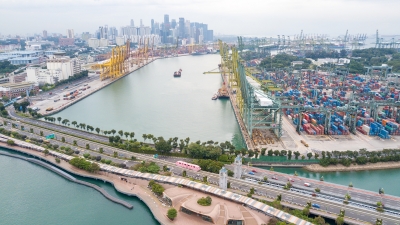
In coastal cities where ports, terminals, industrial waterfronts, utilities, transport corridors, and public spaces all share the same shoreline, the challenge is no longer just about keeping water out, but about ensuring the entire waterfront system can continue to function under changing conditions. This is reshaping how leading ports and cities think about coastal protection. Increasingly, the question is not only whether a system reduces flood risk, but whether it can continue to operate, attract investment, and adapt over time.
Rising sea levels are increasing the frequency of extreme water levels, while compound risks such as storm surge, rainfall, drainage backflow, and infrastructure interdependencies are becoming more significant. In practice, events once considered extreme may now occur within the expected operating envelope of ports and waterfront infrastructure. For owners and operators, this changes the design challenge fundamentally. It is no longer enough to ask whether a defense can withstand an extreme event. We also need to ask how often it disrupts navigation, depends on gates or pumps, constrains redevelopment, or shifts risk into other parts of the system. Protection systems designed for rare events can become operational liabilities when those events are no longer rare.
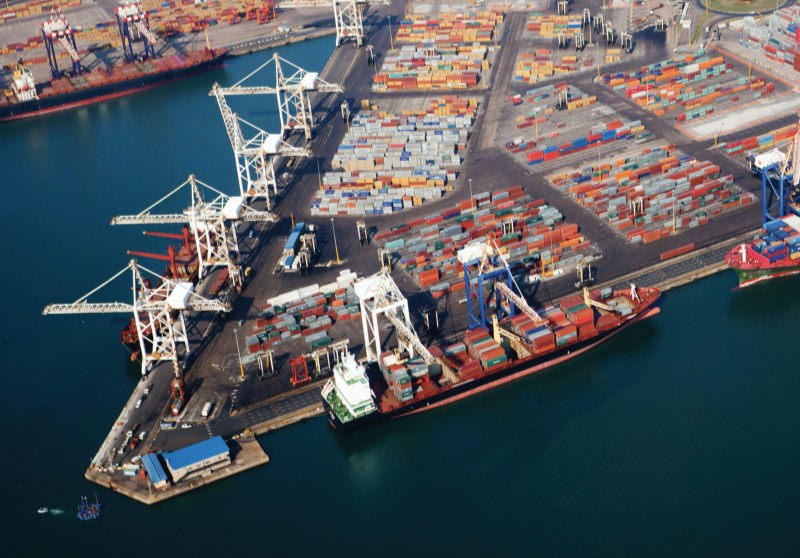
Ports and cities may share the same coastal hazards, but they rarely share the same tolerance for disruption. A city may prioritize public safety, land use, and community recovery. A port is more likely to focus on access, throughput, and supply chain continuity. Waterfront industries and utilities may depend on marine access, intake and outfall functionality, or long-term lease flexibility. Public waterfronts add another dimension again, with expectations around access, amenity, and livability. If these systems are planned separately, adaptation can reduce one risk while creating another. That is why effective planning needs to bring together engineering, operations, land use, and future development.
This broader view is now reflected in international practice. Guidance for ports (such as Resilience4Ports or PIANC) is increasingly framed around understanding impacts, assembling climate information, assessing vulnerability and risk, and developing portfolios of structural, operational, and institutional responses. The common thread is clear: credible adaptation is no longer just about coastal structure design. It is about how risk is managed, how systems operate, and how decisions are made over time.
Rotterdam and the Thames Estuary illustrate this well. In Rotterdam, flood risk is managed as part of a wider port-city system, with adaptation strategies tailored to different areas and informed by economic, operational, and consequence-based analysis. In the Thames Estuary, the TE2100 plan has become a benchmark because it combines long-term flood risk management with monitoring, review cycles, and staged pathways instead of a single end-state solution. The lesson is not about adopting a specific solutions, but that coastal defenses must be part of a broader strategy that considers acceptable risk, operation continuity, and how systems will adapt over time.
New York adds another, equally useful, lesson. After Hurricane Sandy, technically feasible harbor-wide storm surge barriers were studied, yet the city’s planning has increasingly shifted toward layered, reach-based solutions and typology-led responses. Current public work in Lower Manhattan, citywide resilience planning, and the Port Authority of New York and New Jersey’s Climate Resilience Design Guidelines emphasize integrated flood defense, drainage, governance, and public realm outcomes. In a densely developed, complex port-city environment, reliance on a single centralized intervention can concentrate technical, environmental, governance, and operational risk. New York’s experience shows why no-regret measures, local fit, and future optionality can be more durable than pursuing one dominant answer too early.
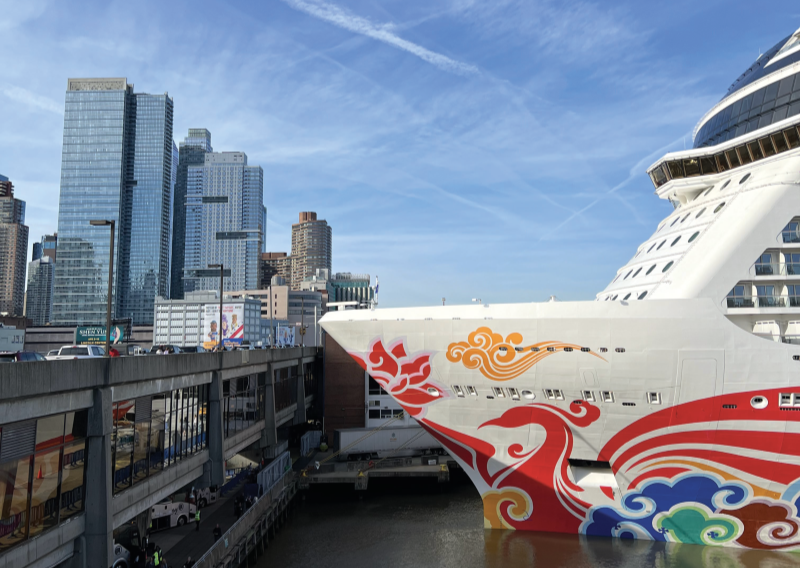
New Orleans shows that strong structures alone do not guarantee system resilience. The Hurricane and Storm Damage Risk Reduction System built after Hurricane Katrina broadly performed as designed during later storms such as Isaac and Ida, yet those events also revealed how residual risk can shift into pumps, power supply, interior drainage, and recovery systems. In other words, the weak link may no longer be the levee or barrier itself, but the supporting systems behind it. For adaptation planning, this is a useful reminder that if loss of power can cause flooding or prolonged disruption, then power is functionally part of the flood defense. It also shows why adaptation pathways should respond not only to extreme water levels, but also to system reliability and interdependencies.
These lessons travel well across Australia, Asia-Pacific, and other international contexts. Australia’s National Adaptation Plan points toward an evidence-based cycle of risk assessment, prioritization, response, and monitoring, while programs such as South Australia’s Climate Ready Coasts are improving consistency in coastal hazard assessment and helping channel science into adaptation planning and investment prioritization. In Singapore, public updates show a similar systems-oriented logic emerging through site-specific studies, comparisons of centralized and decentralized schemes, and an increasing emphasis on multifunctionality and integration with future development. For port cities globally, thresholds in their waterfront systems may include not only water levels, but also unacceptable closure frequency, repeated pump dependence, excessive downtime, or loss of operational functionality. Although the details differ by place, the planning challenge is remarkably consistent: how to protect waterfronts without limiting the functions that make them valuable, because operational disruption can be just as costly as the hazard itself.
At Hatch, this way of thinking aligns strongly with our work at the interface of ports, terminals, marine infrastructure, and long-term waterfront planning. The ongoing challenge is not simply to build higher defenses. It is to shape systems, plans, and investment pathways that remain functional as conditions change. Resilient coastal cities are not built by separating ports from urban adaptation. They are built by bridging them.
In practice, this means shaping solutions that keep waterfronts working under changing conditions, not just protecting them during extreme events. For ports and cities alike, that requires a clearer understanding of how systems perform, where risks shift, and how to adapt over time without limiting future use.
We would like to chat with you to understand your challenges and provide some novel ideas on how to accomplish your longer-term goals. Reach out and connect with us – we’ll ensure that one of our experts can meet with you.
About the author

Ryan Nguyen
Senior Coastal Engineer, Ports and Terminals
Ryan is a civil and coastal engineer with over 20 years of experience in coastal protection, ports and marine infrastructure, and climate‑resilient projects. He specializes in designing and delivering structural solutions for maritime assets, supported by expertise in numerical modelling, GIS, programming, and risk‑based approaches. Ryan has led complex national programs, developed technical guidelines and strategic tools, and helped shape long‑term adaptation strategies that reduce coastal risk and strengthen resilience to climate change.