Aviation's enduring and strategic significance to Canadian sovereignty
Reliable aviation infrastructure has been the connective tissue of Canada for more than a century, ensuring community access and enabling development across vast regions. Since the early twentieth century, aviation has been fundamental to Canada’s national development, resilient defence, territorial integrity, and sovereignty. Nowhere is this more evident than in Canada’s far North, where remoteness, climate, and geography constrain surface transportation and make air access indispensable.
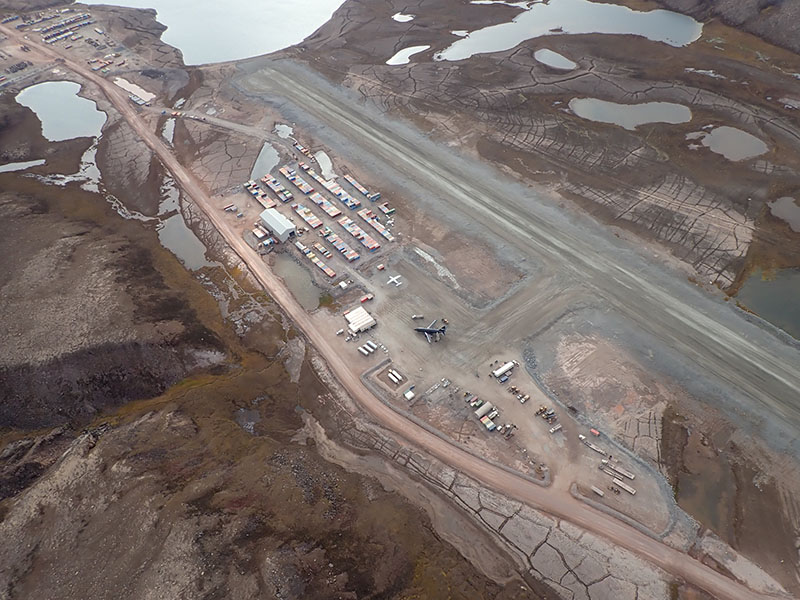
In the vast Arctic and subarctic, air services function as the transportation highway, providing the lifeline for people, goods, and services year-round. Nunavut and Nunavik in northern Québec are composed entirely of fly-in communities with no all-season road connections. In the Northwest Territories, roughly 40% of communities are accessible only by air for most of the year. For residents of these regions, aviation is a necessity rather than a convenience. Northern air carriers provide the only year-round means of delivering essential supplies, medical services, and emergency support.
My experience working on northern aerodrome infrastructure—from Baffin Island to Yellowknife—has reinforced this reality. The North demands precision, resilience, and practical solutions shaped by both environment and operations. Early planning is always critical, as logistics routes and construction seasons are very limited.
Canada was an early adopter of aviation, integrating aircraft into exploration and mapping from the 1910s to the 1930s. Bush flying emerged as a uniquely Canadian innovation connecting remote settlements and Indigenous communities. Aviation enabled surveying, mineral exploration, mail delivery, and medical access, accelerating northern development. By the 1950s, Canada had become a major aviation training and manufacturing hub producing roughly 16,000 military aircraft, preparing more than 130,000 aircrew under the British Commonwealth Air Training Plan.
During the Cold War, aviation became central to Arctic defence, supporting systems such as the DEW Line and extending control over remote airspace. In 1958, Canada and the United States formalized continental defence with the establishment of the North American Aerospace Defence Command (NORAD).
Today, aviation continues to underpin sovereignty. It enables surveillance, patrols, search and rescue, disaster response, and community resupply in an increasingly contested Arctic. Advances in sensors, satellites, and unmanned systems—combined with resilient infrastructure and evolving aircraft types—strengthen domain awareness and reinforce Canada’s presence in the North.
Enabling Arctic sovereignty through aviation infrastructure
Aviation infrastructure is a cornerstone of sovereignty in Canada’s North and Arctic, a region that accounts for approximately 40% of the country’s landmass. Persistent presence, rapid response, force projection, and effective sustainment across vast geographies all depend on airfields that are safe, resilient, and operationally reliable under extreme environmental conditions.
Planning and designing secure and efficient aviation infrastructure in the Arctic demands a critical combination of technical expertise, operational understanding, and environmental awareness. My favorite career experiences have involved innovating airfield infrastructure through collaboration with charter airlines, local communities, constructors, airfield operators, and multi-disciplinary engineering teams. This has enabled multi-use capability of new investments, while being sensitive to the environment and enabling sustainable design solutions.
Designing in the Arctic has made one thing clear to me: resilience is not something you add later, it is where you start. Infrastructure in the North cannot be designed using conventional approaches, as Arctic conditions will rapidly test those assumptions. Failure is not an option.
Environment and climate change
Climate change has only sharpened this focus. What used to be edge cases are now baseline conditions, and we must design with adaptation in mind, with resilient and flexible solutions for a changing environment.
Canada’s 2023 climate report notes the Arctic is warming nearly three times faster than the global average, accelerating permafrost thaw and putting airfield infrastructure at risk. The teams I have worked with on northern infrastructure focused heavily on permafrost engineering, thermal modelling, life-cycle costing, climate change assessments, and asset management systems in support of mission-ready infrastructure.
Aircraft hangars, fueling systems, cargo handling facilities, and maintenance buildings are designed to support sustained operations while minimizing operational risk and environmental impact. Surrounding infrastructure, including roads, utilities, bridges, intermodal connections, and parking, must be planned as part of a holistic base or site ecosystem, ensuring efficient movement of personnel, equipment, and supplies.
Beyond the technical challenges, what stands out most to me is the importance of perspective. The best solutions have come from listening—to operators, local communities, existing Canadian Armed Forces (CAF) operations, and crews who live with this infrastructure every day, not as a far remote site, but as their home.
Infrastructure is sovereignty
For the CAF and its partners, aviation infrastructure in the North is not simply about assets, it’s about assured access, endurance, and credibility.
Hatch brings a systems-level engineering and management approach, whether for constructability considerations or for multi-use concept of operations. Modular construction approaches and value-for-money solutions are employed to accelerate delivery, reduce risk, and adapt operational capability to changing mission requirements.
By understanding the Arctic, its climate, terrain, logistics, communities, and strategic importance, Hatch helps reimagine the future of multi-use aviation infrastructure as a true enabler of sovereignty. The result is infrastructure that supports persistent presence, rapid surge capability, allied interoperability, and long-term resilience, ensuring Canada can operate, respond, and lead with confidence across its northern approaches.