Operating in the Arctic? You'd better have a plan!
.jpg)
Canada’s Arctic is environmentally diverse, majestic, beautiful, and vast. It is also remote, unpredictable, and unforgiving. Northerners thrive in the Arctic because of their culture, traditions, knowledge, and experiences from untold generations of living there. Teams from the south that succeed in the region are respectful of the environment, and its ability to become hostile without warning. They plan meticulously, execute deliberately and safely, and remain grounded regardless of previous experience. I learned this during my service in the Canadian Army and have had it repeatedly reinforced throughout my 14 years at Hatch.
I know from personal experience, the Arctic is one of the few places in the world where improvisation isn’t an asset; it’s a liability. Up there, if you want to survive, “You better have a plan.” It’s a place that demands preparation long before anyone arrives, and without the right infrastructure and planning in place, even the most capable teams quickly find their limits.
The government of Canada’s renewed interest in making the region strong and resilient is a welcome development. Enhanced northern security hinges on a strategic plan that invests in robust infrastructure for all. We need the critical facilities that make sustained operations by the Canadian Armed Forces possible in one of the harshest locations on earth. Now is the right time for decision makers to develop a coordinated, wellfunded Arctic readiness plan that integrates communities, industry partners, and government so that key infrastructure and capabilities are established before they are needed.
I first heard the phrase, “You better have a plan,” from my section commander after joining the Canadian Airborne Regiment in 1981. One of the regiment’s responsibilities was the defence of Canada’s Arctic region. The Arctic sat far beyond most transportation, communication, and infrastructure grids, which meant every operation had to be meticulously planned and coordinated in the south before projection into the North.
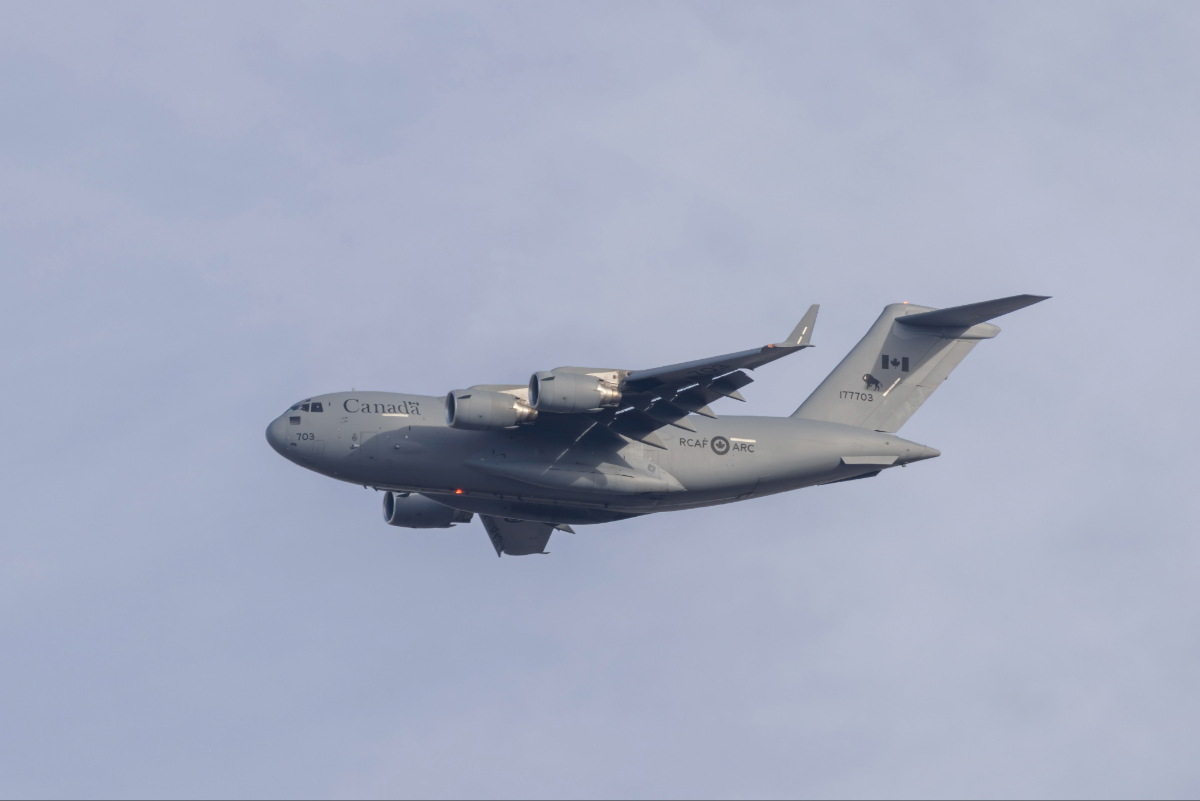
The lack of infrastructure shaped everything—how we deployed, how fast we could respond, and how long we could remain in the field—which is why the quickest and most reliable way to get large groups of personnel and equipment into the region was by airdrop. Parachuting into our Arctic with hundreds of other soldiers and tonnes of equipment is simultaneously exhilarating and daunting. Once on the ground, our drop zones were expanded into landing areas for transport and rotary- wing aircraft to support onward deployment. This required a complex ballet of coordination, pre-rigging, and pre-positioning equipment, staging aircraft, jumpers, and loads in the correct sequence for arrival at the right drop zone, at the right time, for the right purpose. Add the unpredictability of weather and punishing environmental conditions, and tolerance for error becomes negligible.
We rehearsed these coordination, staging, and Arctic operating skills hundreds of times during sovereignty operations (SOVOPS) from Inuvik to Goose Bay, from Cape Dyer to Tuktoyaktuk, and across many other locations in the Arctic.
Even with extensive training, expertise, and experience, Canada’s paratroopers and other land forces of the Canadian Army rarely conduct land manoeuvres in the Arctic without the accompaniment of the Northern Rangers. The Rangers are part of the Reserves, formed by local people serving with the Canadian military. They are eyes and ears across our North and consist of five Indigenous and integrated patrol groups. About 5,000 Rangers live in more than 220 predominantly northern communities, and their knowledge and skills are essential to any successful Arctic operation. Yet they continue to rely on aging infrastructure and equipment that does the job but no longer meets the evolving security needs of a warming Arctic and a heightened threat environment.
The Arctic does not care about your confidence
In this environment, ego is an enemy and overconfidence can be deadly. The landscape and the cold are not just a picturesque backdrop. They are often adversaries. There are no roads, no big-box stores for forgotten supplies, communications are unreliable, batteries drain twice as fast, lubricants freeze, vehicles don’t start, metal becomes brittle, and human performance deteriorates. In many places the Northern Lights are to your south. You can be the most experienced operator, the strongest leader, the toughest team member, but none of that matters if your equipment fails or you haven’t built time into your plan for the simple, slow reality of working in extreme cold. Out here, even something as simple as taking off a glove becomes a calculated decision with real consequences.
So, organizations operating in the Arctic must pay attention to the smallest details—safety, weather, team members, decisions, light and ice conditions, terrain, protective clothing, frostbite, calorie intake, and wildlife. Underestimating the impact of any of these planning factors can result in catastrophic failure.
Logistics will make or break your plan
“Amateurs talk tactics, professionals talk logistics” – General Robert H. Barrow United States Marine Corps
An underrated but critical success factor in the Arctic is the strength and coordination of the logistical tail. From a project delivery perspective, peak construction season lasts about 8-12 weeks (June to August), sometimes extending into September depending on location. Site access typically relies upon sealift or ice-road seasons typically lasting 6-10 weeks from August to early October depending on ice conditions and weather.
Whether conducting a military operation or a major project, initial site capture depends on carefully calculating requirements for accommodations, power, fuel, potable water, wastewater treatment, food, communications, air movement, and additional infrastructure—airfields, ports, and staging areas for personnel and large cargo loads. Northern projects must account for all of this, along with building materials and construction equipment.
Sustained operations depend on detailed understanding of these make-or-break planning factors. Overland loads must be carefully built up, prioritised, and pre-positioned at trail heads for onward movement when ice conditions are favorable. Likewise, when resupply depends on barge delivery, loads must be assembled, prioritised, loaded, and lashed in anticipation of ice melt or a shortened barging season. If these complex logistical calculations are misunderstood or underestimated, even the best-laid plans quickly unravel.
The challenge for the Government of Canada and the Canadian Armed Forces is that the supporting infrastructure and power required to sustain Arctic operations must be available before assigned response forces arrive. Right now, this is not the case. Existing infrastructure and power are limited, widely dispersed, and not well-suited to large-scale deployments.
Sufficient quantities of resupply commodities, repair parts, operational support capabilities, communications systems, and shelter must be pre-positioned to reduce response times and increase operational sustainability. These gaps must be closed faster than threats can evolve. This is where Hatch’s Arctic experience—having delivered most of the mining infrastructure North of 60 over recent decades—can be immediately leveraged, using proven capabilities to deliver fail-safe results.
To assume you can overcome the Arctic’s challenges and operate there by force of will, is to be arrogant and overconfident. Without exception, it will break you, humble you, embarrass you, or worse. This is not an overstatement, it’s a fact. My years of parachuting into the Arctic with the Airborne Regiment and operating there since joining Hatch isn’t about being fearless – it’s about being prepared. Because in the High North, one truth stands above all others: “You better have a plan.”
About the author
Carl Deroche
Chief Warrant Officer (Retired), Global Discipline Director , Defence and Security
Carl Deroche is the Global Discipline Director, Defence and Security at Hatch, joining the organization after a distinguished 32-year career in the Canadian Army.
He has developed a collaborative, standardized deployment capability that supports major projects worldwide, and now combines his remote operations expertise with his background as a paratrooper to co-lead the Hatch Defence team.
Carl’s work focuses on strengthening Canadian sovereignty and supporting Canadian Armed Forces operations—especially in the Arctic, where infrastructure and readiness are mission critical.