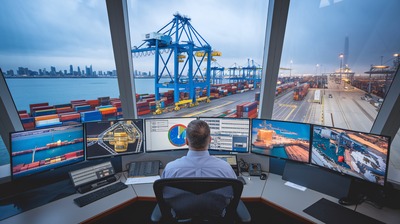
Automating container terminal operations unlocks efficiency, reduces environmental impact, and enhances safety. Yet doing so requires more than installing new equipment or software. It demands alignment of people, process, and technology into a synchronized “system of systems,” where every component integrates seamlessly to deliver sustainable performance and long-term resilience.
Too often, capital-intensive projects, whether greenfield developments or retrofits, focus first on civil and electrical infrastructure or equipment procurement. Integration of IT/OT systems are identified but treated as a budget “rounding error.” Details of how they will be integrated are deferred to later phases, resulting in costly patches, workarounds, and underperforming assets.
A well-integrated solution ensures civil infrastructure, communications networks, software platforms, onboard equipment technologies, and automation tools function together. Achieving this requires a realistic Concept of Operations (ConOps), developed by a multidisciplinary team of terminal staff, labor specialists, IT/OT architects, and safety professionals. The ConOps must anticipate not only normal workflows but also exception scenarios. For example, cameras at rail gates may fail to read container IDs obscured by graffiti or double stacking. Without early planning, terminals face expensive retrofits such as installing radio frequency identification readers where there had not been planned infrastructure. Similarly, machines that move containers must handle odd or unbalanced loads. If systems cannot automatically adjust, workers are forced to intervene manually, slowing operations and eroding efficiency.
Owner leadership: Define integration from day one
Terminal owners carry the ultimate responsibility for integration. Vendors deliver components, but only the owner defines how those components must work together to support operational processes. Translating needs into specific, measurable, and attributable requirements in procurement is critical. Broad goals like “gross moves per hour” depend on too many variables and therefore cannot be attributable to one vendor. Instead, requests for proposal should spell out specifics, including usability standards, maintenance expectations, cybersecurity preferences, constructability considerations, and safety protocols. Clear requirements prevent confusion, improve accountability, and ensure solutions work reliably over time.
Integration must extend beyond message exchange between systems. It requires operational logic—the ability of systems to respond intelligently to real-world conditions, such as redirecting equipment when a scheduled container pickup fails.
Early QA and commissioning: Test for real-world resilience
Quality assurance and commissioning strategies must be defined early. Before systems go live, they must be tested under realistic conditions. Robust emulation environments that replicate operational flows, including ship-to-shore crane systems, truck exchange lanes, and straddle carrier simulators, help identify and resolve defects early. Excluding systems to simplify testing risks overlooking critical logic decisions. Comprehensive integrated testing verifies how operational decisions are made across all systems, ensuring resilience under real-world conditions. For example, skipping crane controls or safety systems from testing might seem faster or less costly, but it can hide flaws that disrupt operations later. Thorough testing ensures issues are caught before they cause real-world failures.
These principles aren’t just theoretical; they’ve been applied successfully in real-world projects. At the Port of Los Angeles, for example, Hatch built an emulation environment that included the terminal operating system, gate systems, crane controls, safety access, and fleet management. This system integration testing validated performance under varied conditions, uncovered issues early, and enabled a smooth transition to live operations.
Preparing the workforce: Build operational readiness
Automation introduces new organizational demands. Emerging technologies require new skills, such as understanding IT/OT systems, analyzing data, and programming machines and equipment. Preparing for operational readiness means defining roles, responsibilities, and escalation paths. Ramp-up strategies ensure a smooth transition from commissioning to full operations. Resources such as performance dashboards and training programs build operator confidence and minimize disruption. Effective ramp-up also requires realistic simulations, contingency planning, and clear handover protocols, so operations teams are fully prepared to take control.
Data: Powering the automated terminals
Data is often treated as an afterthought, but its availability, quality, and integration are critical to success. Requirements must be defined from the outset to support digital twins, analytics, and continuous improvement. From commissioning through ramp-up and optimization, data confirms that equipment is communicating correctly, highlights inefficiencies in movement cycles, and supports preventive maintenance by shifting from time-based to usage-based schedules.
When issues arise, conducting deep log analysis of system interactions can uncover misinterpretations between systems, dramatically improving root cause diagnoses. Additionally, specialized reporting tools provide operators with visibility into system interactions, equipment performance, and operational bottlenecks. These insights enable targeted actions that enhance performance, resolve problems, and support better planning.
The path forward: Integration as a continuous discipline
Automation is not a onetime project. It’s a journey that requires trusted partners who understand both the technical and human dimensions of change. At Hatch, we work side by side with terminal owners, operators, and stakeholders to align people, process, and technology into integrated systems that deliver lasting value. By approaching integration as a shared discipline, we help our partners anticipate challenges, accelerate readiness, and unlock sustainable performance. Together, we can shape the next generation of container terminals: resilient, efficient, and ready for the future. Contact us to start building your integrated automation strategy.