Resilient by design: Rethinking coastal protection through the lens of pocket beaches
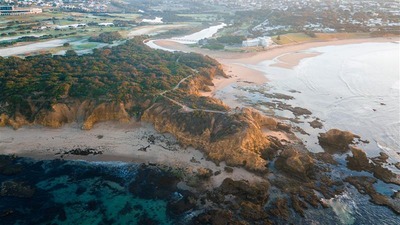
From Australia to the Mediterranean to the Atlantic seaboard, pocket beach behavior remains poorly understood. Unlike long, open sandy beaches, pocket beaches are hemmed in by headlands or structures that disrupt the flow of waves and sediment. This makes them more complex, more variable, and often more vulnerable. If we manage them with the same strategy as their open-beach counterparts, we risk misdiagnosing problems and mismanaging solutions.
The overlooked dynamic of pocket beaches
A recent year-long investigation of five pocket beaches in Robe, South Australia, revealed that these systems are anything but static. Sediment volumes swung seasonally by as much as 10,000 cubic metres. In calmer summer conditions, beaches swelled, only to be pared back by winter storms.
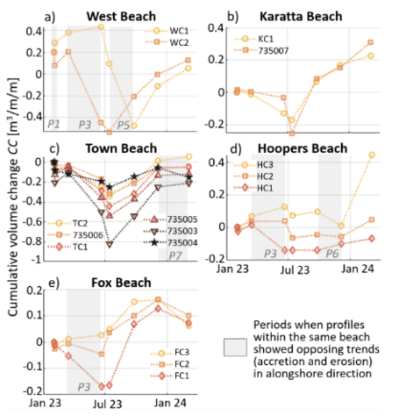
Despite these seasonal swings, the annual net volume change was minimal, suggesting resilience, but also masking risk not in the long-term balance but in the short-term extremes. Homes behind dunes, coastal roads, and tourist amenities are not threatened by gradual net change, but by seasonal erosion spikes that can carve dunes back meters in a single storm.
Why this matters for coastal management
Pocket beaches require management strategies that are attuned to their unique rhythms. Traditional nourishment programs often fail here, as sediment can bypass headlands or be lost from the system entirely. Timing is everything: replenishment done without regard to seasonal erosion and recovery cycles risks washing investment offshore within months.
Equally important is recognizing spatial variability. Two beaches a kilometer apart can respond differently to the same storm, depending on orientation, bathymetry, or the presence of structures like groynes. In Robe, for example, Town Beach saw dramatic seasonal dune retreat while nearby Fox Beach actually accumulated sand during storms thanks to headland-induced sediment trapping. These differences underscore why management must be site-specific, not one-size-fits-all.
A new lens for resilience
For coastal leaders, the key takeaway is clear: resilience lies in recognising variability, not assuming stability. Pocket beaches are not broken versions of open beaches; they are systems with their own operating rules. Protecting them—and the communities that depend on them—requires:- Seasonal foresight: anticipating erosion peaks and aligning protection or nourishment accordingly.
- Site-specific strategies: tailoring interventions to orientation, exposure, and structural influences.
- Long-term monitoring: moving beyond episodic surveys to continuous datasets that capture interannual variability.
- Integration of natural processes: designing with the grain of wave refraction, sediment bypassing, and beach rotation, rather than against them.
The bigger picture
As climate change accelerates, the stakes rise. Storms will hit harder, water levels will push higher, and the seasonal cycles documented at Robe may intensify. Communities can no longer afford to think of coastal protection as a one-off project; it must be an adaptive, learning process.Pocket beaches, often overlooked, offer an important lesson: resilience does not mean resisting change, it means working with it. For decision-makers and designers, that means integrating science, site-specific data, and adaptive strategies into every stage of planning. Only then can our coastal protection strategies be resilient by design.
Connect us today to explore site-specific strategies that work with nature, not against it.
About the author

Charlotte Uphues
Coastal Engineer, Ports & Terminals
Charlotte is a coastal engineer and PhD candidate at Flinders University, collaborating with the District Council of Robe. She specializes in coastal morphology driven by sediment transport from waves, currents, and wind. With expertise in numerical modeling, field measurements, data analysis, and project management, Charlotte is passionate about developing sustainable solutions to protect coastlines against climate change and sea-level rise.