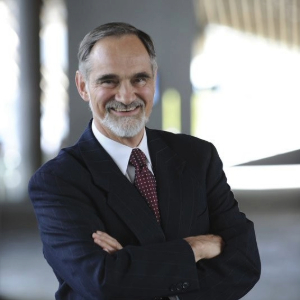
Chris Twigge-Molecey
This week marks the anniversary of the passing of one of Hatch’s most talented engineers, Dr. Chris Twigge-Molecey. His nearly 50-year career at Hatch shaped the evolution of metallurgical practices and left a legacy of innovation, leadership, and mentorship that continues to inspire.
Those who worked with Chris remember not only his technical brilliance but also his deep sense of caring.
Former Hatch CEO Ron Nolan captured Chris’s essence best:
“I had the honor and the pleasure of working with Chris for most of his career. It would be hard to find anyone more devoted to both his profession and his family.
At Hatch, we often speak about one of our truths: ‘A client doesn’t care what we know until they know that we care.’ I believe that perfectly describes Chris’s career. He cared deeply—about our clients, about his profession, about the industry, and about advancing science. His accomplishments speak for themselves:
- A very successful career delivering engineering projects
- Fellow of the Canadian Academy of Engineering
- President of the Canadian Institute of Mining, Metallurgy and Petroleum
- Numerous contributions to academia and his commitment to passing knowledge to the next generation
All the while, Chris managed a full load of project work in the office, implementing projects while dedicating significant time to the industry. His input at the front end of projects was invaluable because he understood that success depended on thorough planning before implementation.”
Nolan’s tribute highlights the character and the remarkable achievements that defined Chris’s career.
His contributions were recognized globally, earning some of the industry’s highest honors, including the AIME Mineral Economics Award (2006) and the Airey Award (2015), the most prestigious recognition from the Canadian Institute of Mining, Metallurgy and Petroleum, the Metallurgical Society.
Chris began his career at Hatch in the early 1970s, a period of rapid change for the industry. Metallurgical plants were becoming larger and more complex, while expectations for environmental performance and worker safety were increasing. Traditional approaches to facility design were no longer sufficient.
Recognizing this gap, Chris introduced two disciplines that significantly broadened the scope of metallurgical engineering: Industrial Acoustics and Fluid Mechanics & Heat Transfer. At the time, these fields were often treated as peripheral—important but not integrated into the core design of smelters, refineries, or industrial buildings. Embedding advanced modeling and systems thinking into project execution improved plant efficiency, environmental performance, and operability.
This approach set the tone for his career: identify the limitations of conventional practice, develop rigorous technical solutions, and institutionalize knowledge so others could build on it.
Chris’s influence extended beyond technical problem solving. Among his most notable contributions was the creation of a patented process to optimize arsenic removal in gold processing, a breakthrough that earned international recognition. This innovation resolved a long-standing industry challenge and illustrated his ability to combine deep theory with practical application.
Perhaps the most durable element of Chris’s career is the knowledge he shared with the next generation of engineers. As an adjunct professor and a prolific presenter of technical papers, he ensured that professional practice continually evolved. Knowledge, in his view, only mattered if it was used.
Tribute from Hatch engineer Britt MacKinnon:
“Chris was a truly remarkable mentor and entrepreneur with a technical soul. I will forever be grateful for Chris’s mentorship and support of my lifelong learning at Hatch and in the MetSoc community. He generously supported Hatch’s YP e-Pal Program that connected young professionals with ‘retired’ employees. The program served to connect individuals to have meaningful discussions aligned with their interests. This is how Chris's and my mentor-mentee relationship started as I had the opportunity to learn from his tremendous career experience with sustainable design. He is greatly missed and will be forever remembered.”