There was a good benchmark for industrial construction costs in Quebec. Then it broke.
Hatch's study of its own projects in Quebec revealed a surprising driver of growth in construction costs
By Lise Bouchard
August 19, 2026
Construction in Quebec is booming as the region embarks on one of its most ambitious periods of building large projects in its history. The provincial and federal governments are providing support with programs such as The Quebec Infrastructure Plan ($167 billion in investment over the next decade), and PM Mark Carney recently announced an additional $10 billion federal infrastructure spending package.
The project pipeline in the province is full and diversified, including hydroelectric expansion, critical minerals extraction, battery supply chain investment, and large-scale infrastructure renewal and rehabilitation. These investments will shape Quebec’s economy and its future.
As other provinces that have experienced construction booms will tell you, these projects may cost more than anyone's models said they would. Across industries, total "all-in" construction costs have soared. Given the huge investment at stake, understanding and mitigating the acceleration of construction costs has become one of the most urgent challenges facing Quebec.
Hatch has experienced this acceleration first-hand in some of our major projects in Quebec. Last fall, we set out to analyze some of our projects in the province to uncover what the numbers actually showed. The answers we found did not reveal any single, simple cause. Instead, the data pointed to a new combination of structural and human shifts.
What normal used to look like
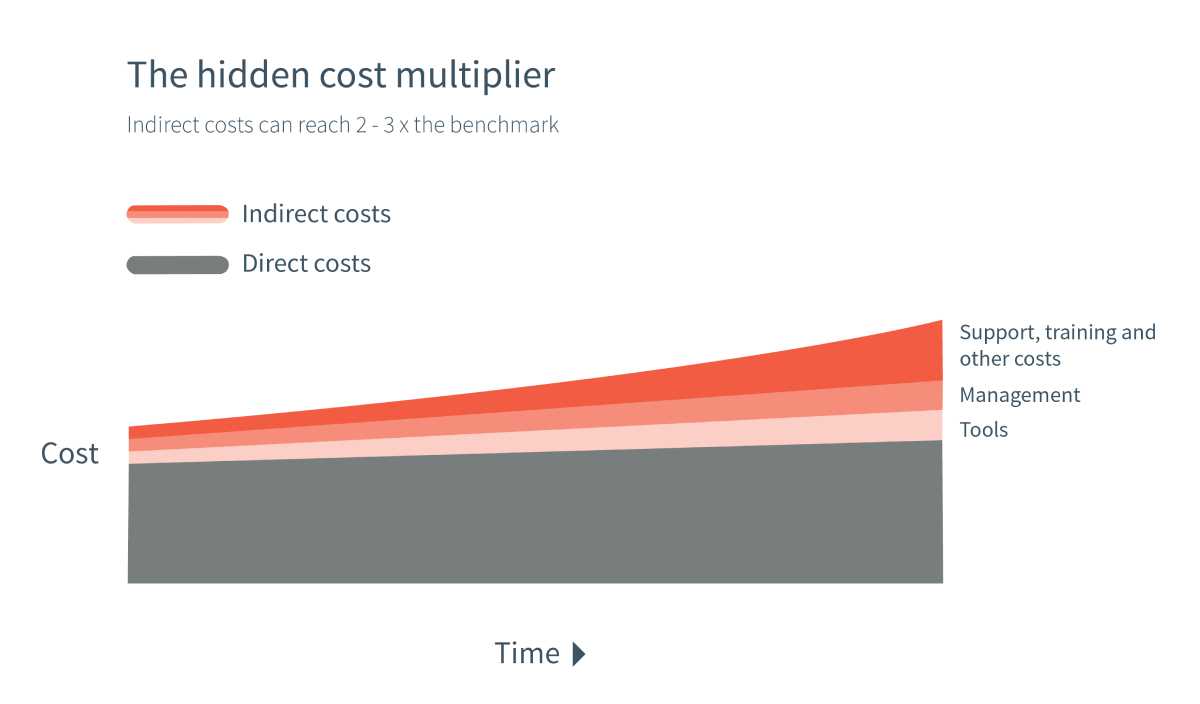
For decades, the construction industry in Quebec operated on a set of estimating assumptions that everyone generally agreed on. When Hatch estimated a project, we could roughly calculate rates that matched what we saw during work on a site. With contractors, the costs for indirect staff, support staff, and facilities followed predictable ratios. A rough rule of thumb was that about a third of the direct labour cost covered the contractor’s support expenses for drivers, warehouse staff, managers, procurement agents, planners, training and whatever else was needed to support the work.
Although there was always variation between projects or contracts, this was stable enough across large project types and across economic cycles that it became part of the background of estimating and was built into models as the benchmark.
The new normal - similar projects, different stories
Starting about five years ago, new cost pressures started to emerge. Although the projects were different, the same pattern was becoming visible across projects so different from each other, we thought it might point at something systemic. It was time for an investigation into why. Was it time for a reexamination of our rules of thumbs, methodologies, and benchmarks?
On a kind of project that Hatch had executed numerous times in the past, we observed that, following contract award, indirect labour costs significantly exceeded the planned budget. In another project with additional complexity, indirect labour hours more than doubled. Complexity could not account for all of the observed difference. Overall, we have seen the relative indirect labour costs have doubled or more compared to similar projects before this trend began.
Direct labour hours in those projects, by contrast, either remained the same or saw a much smaller increase.
The workforce story behind the numbers
The collapse of the benchmark for indirect labour was a consistent finding across the projects. With indirect costs doubling or more in some cases, the overall economy of large projects is shifting.
That benchmark is wrong not because people miscalculate, but because the underlying reality has shifted.
For many years, the level of Quebec’s capital expenditure on large industrial projects had remained low. With fewer big projects, a generation of experienced workers retired or left for other industries. The effects of the COVID pandemic accelerated the trend. The pipeline of skilled replacements for some trades never filled back up.
Facing a labour shortage, Quebec lowered the requirements to enter the construction industry, meaning fewer workers arriving on site held a diploma. When investment in major infrastructure and resource projects returned in roughly 2018, the industry did not have the qualified workforce to execute them the old way. New, younger workers came into the industry. They got the work done, but they needed more support: more supervision and more training, among other things.
Less-experienced workers are not less motivated; what they often need, though, is more support. The cost to support their work has grown considerably.
Indirect labour costs are not the only driver of the construction cost crisis. We found other forces at work, such as the increased complexity of some projects.
Convening a conversation about solutions and actions
None of what we found in our projects points at a single culprit or a single, simple fix. The combination of forces that are pushing construction costs to new heights is complex and some began decades ago. Our findings do not point at a single culprit or a single, simple fix, but indicate a number of issues and questions to investigate and mitigate or improve.
Among the open questions to continue to look at:
- Which elements of this issue are specific to Quebec, and which are broader?
- How long will the acceleration in costs continue?
- What are the real, root causes driving it?
- What are some of the aspects that owners, engineers, government, and contractors can fix?
- How can Hatch help to break the silos?
Hatch is organizing a cross-sector symposium in Montréal this fall to dig into these questions and to help build a clear, shared picture of those forces and what is happening in the industry today.
The private event will bring together project owners, contractors, engineers, government stakeholders, institutions, and researchers to examine the cost dynamics at work in Quebec's major project pipeline, compare findings, and work toward better frameworks for estimating, risk-sharing, and project delivery.
Hatch will share some of the findings and conversations from the symposium later this year.