Modernizing port container terminals: Navigating the path to automation
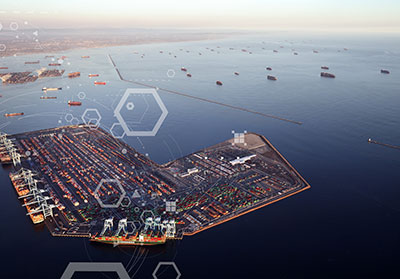
Ports are crucial to global trade and international commerce, supporting a global industry worth a staggering US$14 trillion. According to the International Chamber of Shipping, 11 billion tons of goods—from raw materials to fine art and everything in between—are shipped annually. The containerized segment of the market increased by 43 percent in the last decade to 866 million twenty-foot equivalent units (TEU) in 2022—and with stress factors such as limited space for expansion, the ever-growing pace of goods exchange, shifting manufacturing centers, climate change, and geopolitical uncertainty—terminals need to be able to handle more cargo and be more agile and nimble than ever.
While terminals operators generally want to improve efficiency, productivity, safety, and return on investment, they aren’t always quick to implement new technology into their operations.
There are good reasons for this “if it ain’t broke, don’t fix it” mentality. Among them:
 Cost |
Implementing change, including modernization and automation, often involves significant upfront costs. |
 Complexity |
Complex systems can mean complex implementation. Solutions may require skilled project teams that deliver organizational change, not just procurement of new pieces of equipment. |
 Risk |
Large change/small time frame. Potential disruptions can affect the flow of goods, and automation can bring and increase dependence on system functionality. |
 Time-proven methods |
Established practices and procedures are ingrained in the culture and operations of the terminals. |
 Business case |
Although modernization is an enabler for many key objectives in a terminal such as improved safety, enabling energy efficiency initiatives, and reduction in costs, quantification of expected benefits can be challenging. |
 Labor considerations |
Modernization may lead to concerns from the workforce and unions about potential impacts on their careers and livelihoods. It's important to engage in open dialogue to address these concerns and work toward mutually beneficial solutions. |